
7 Simple Ways to Build Problem-Solving Skills in Young Children
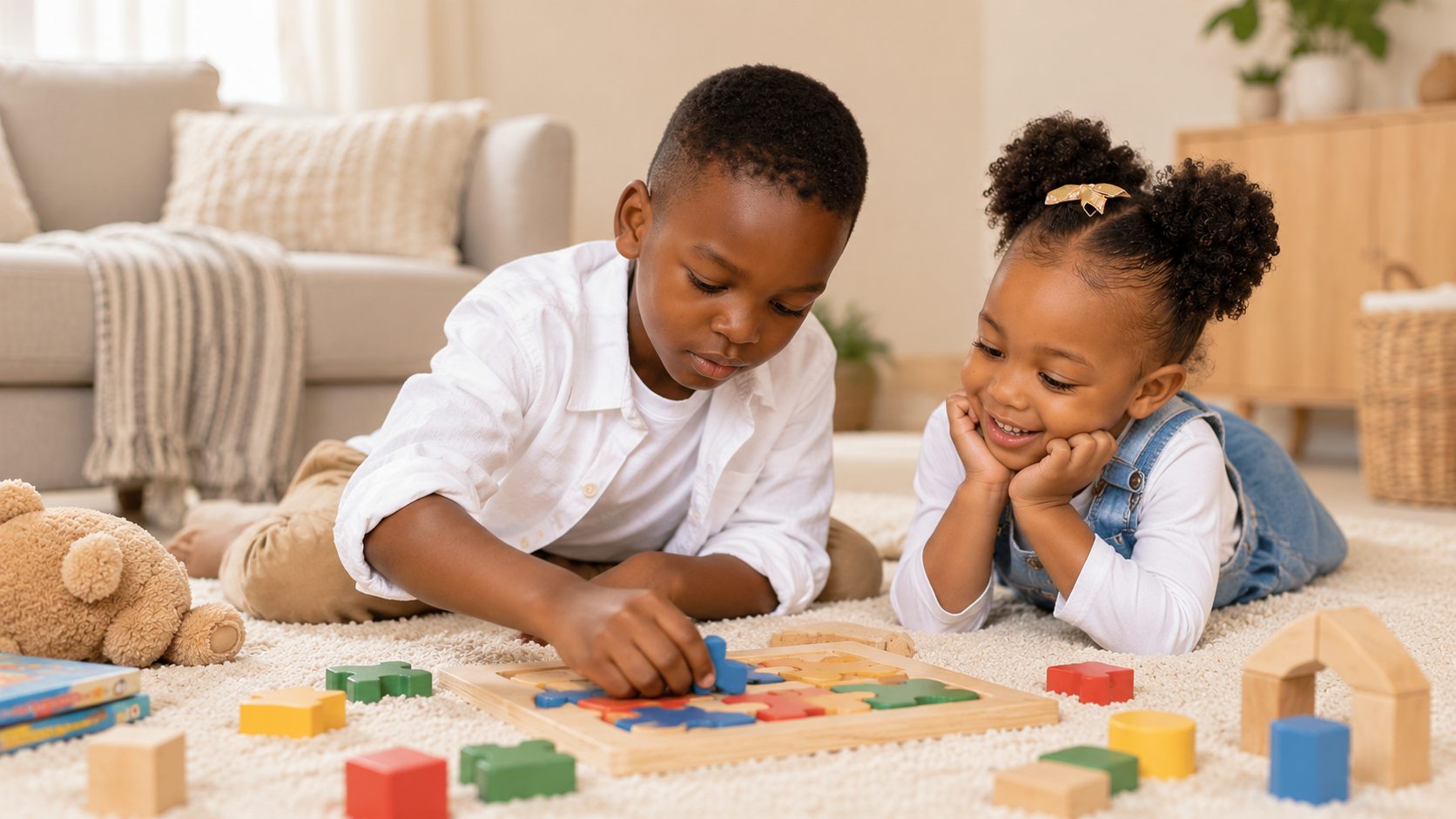
Problem-solving skills in young children help them think independently, make decisions, handle challenges, and find solutions instead of immediately asking an adult for help. The good news is that parents do not need complicated lessons to develop these abilities. Everyday games, puzzles, pretend play, building activities, and simple household challenges can become powerful problem-solving activities for kids.
Young children naturally build problem-solving skills by exploring, experimenting, making mistakes, and trying again. Instead of immediately stepping in when they face a challenge, parents can give children time to find their own solutions. Simple everyday activities at home can strengthen critical thinking, creativity, confidence, logical reasoning, and independence without making learning feel like another lesson.
Why Are Problem-Solving Skills Important for Young Children?
Problem-solving is more than finding the correct answer. It involves understanding a challenge, thinking about possible solutions, choosing an approach, testing it, and learning from the result.
When children regularly practise these skills, they begin to understand that a difficult situation does not necessarily mean they should give up. They learn to try another strategy when the first one does not work. This builds logical thinking, decision-making skills, creativity, perseverance, and cognitive development.
These abilities are also useful beyond academics. A child who learns to solve a puzzle independently is practising the same basic thinking process they will eventually use when solving a maths problem, resolving a disagreement with a friend, completing a school project, or handling an unfamiliar situation.
What Are the Best Ways to Build Problem-Solving Skills in Young Children?
The best problem-solving activities for kids are usually simple, hands-on, and open-ended. Instead of telling children exactly what to do, give them opportunities to explore different possibilities.
1. Turn Everyday Problems Into Mini Challenges
You do not need special materials to practise problem-solving. Everyday situations can become small challenges for your child. Ask questions such as, “How can we carry all these toys at once?” or “What could we use to stop the blocks from falling?”
Give your child time to suggest an idea and test it. If it does not work, encourage them to think of another possibility rather than immediately solving the problem for them.
This simple approach teaches children that problems can have multiple solutions. It also strengthens creative thinking, reasoning, decision-making, and independence.
2. Let Them Build, Construct, and Experiment
Building activities are excellent problem-solving games for kids because children can immediately see the results of their decisions. Give your child blocks, LEGO-style pieces, cardboard boxes, cups, or other safe building materials and provide an open-ended challenge.
You could say, “Can you build a bridge that can hold this toy?” or “Can you make the tallest tower you can?”
The important part is not whether the structure succeeds on the first attempt. When the tower falls or the bridge cannot hold the toy, your child gets an opportunity to analyse what happened and change the design. This encourages experimentation, spatial reasoning, persistence, and logical thinking.

3. Make Puzzles Part of Playtime
Puzzles naturally encourage children to observe details, recognise patterns, compare possibilities, and think ahead. Start with puzzles appropriate for your child's age and gradually introduce more challenging ones.
Instead of placing the correct piece for your child, ask questions such as, “What do you notice about this piece?” or “Where else could it fit?”
You can also introduce simple matching games, mazes, sorting challenges, sequencing activities, and age-appropriate riddles. These activities strengthen cognitive skills and problem-solving abilities while keeping learning playful.

4. Use “What Would You Do?” Questions
Young children encounter small social and practical problems every day. Turn these moments into opportunities for critical thinking for children by asking what they would do in a particular situation.
For example, ask, “What would you do if your friend wanted the same toy?” or “What could you do if you forgot where you put your favourite book?”
There does not always have to be one perfect answer. Encourage your child to suggest different possibilities and discuss what might happen after each choice.
This develops decision-making skills while also helping children understand consequences, consider other people's perspectives, and communicate their ideas.
5. Try Simple STEM Activities at Home
STEM activities can make problem-solving feel like play. You can create simple challenges using household materials, such as asking your child to design a paper bridge, build a structure using cups, or find out which objects float or sink.
Before starting, ask your child what they think will happen. Then let them test their prediction.
This process of predicting, testing, observing, and changing an approach is an important part of scientific thinking and problem-solving. It also encourages curiosity and teaches children that mistakes and unexpected results are part of learning.

6. Encourage Children to Find More Than One Solution
Children often assume that every problem has one correct answer. You can expand their thinking by asking, “Can you think of another way?”
For example, if your child wants to reach something placed on a high shelf, ask them what they could safely do to get an adult's help. If they are trying to organise their toys, ask whether there is another way to sort them.
When children practise finding multiple solutions, they develop flexible thinking. They learn that when one strategy does not work, they can change their approach rather than giving up.
7. Give Them Time to Struggle Productively
One of the most powerful ways to build problem-solving skills is also one of the simplest: do not solve every problem immediately.
When your child says, “I can't do it,” resist the urge to take over. Instead, acknowledge the frustration and encourage another attempt. You might say, “That looks tricky. What have you tried so far?” or “What could we try next?”
This does not mean leaving children frustrated for long periods. Offer support when needed, but give them enough space to experience the satisfaction of figuring something out independently.
Over time, these experiences build perseverance, confidence, and resilience.
How Does Problem-Solving Benefit Children?
Problem-solving helps children develop critical thinking, creativity, communication, concentration, logical reasoning, and decision-making skills while building independence. These abilities are valuable in both school and everyday life, helping children think through challenges, explore solutions, and become more confident learners. Activity-based learning, such as ClassMonitor’s approach, can make developing these skills engaging and practical.
Expert Parent Tips for Building Problem-Solving Skills
The goal is not to make every activity difficult. Children develop problem-solving abilities through regular opportunities to think and make choices. Keep challenges appropriate for your child's age and allow them to make mistakes without immediately correcting them.
Instead of asking, “Do you need help?” try asking, “What could you try?” This shifts the child's attention from depending on an adult to considering possible solutions.
Praise the process rather than only the result. Saying, “I noticed you tried a different way when the first one didn't work,” teaches children that persistence and flexible thinking matter.
Most importantly, keep problem-solving playful. Young children learn best when they are curious, engaged, and actively involved rather than feeling that every activity is a test.

Frequently Asked Questions
How can I improve my child's problem-solving skills?
Give your child regular opportunities to solve age-appropriate challenges independently. Puzzles, building activities, sorting games, STEM experiments, pretend play, and everyday household problems can all strengthen problem-solving skills.
What are the best problem-solving activities for kids?
Puzzles, mazes, construction challenges, matching games, riddles, STEM experiments, sorting activities, and open-ended building tasks are effective problem-solving activities for kids.
At what age should children start learning problem-solving skills?
Problem-solving begins naturally during the toddler and preschool years. Young children can practise through simple choices, puzzles, building activities, pretend play, and everyday challenges.
How does problem-solving help children in school?
Problem-solving helps children develop logical thinking, concentration, decision-making, persistence, and confidence. These skills can support learning across subjects, particularly maths, science, language, and project-based activities.
How can parents teach critical thinking to young children?
Ask open-ended questions, encourage children to explain their thinking, let them compare different solutions, and give them opportunities to predict, test, and change their ideas.
Should parents help children when they are struggling?
Yes, but try not to solve the entire problem for them. Give your child time to think, offer a small hint when necessary, and encourage them to try another strategy.
Can games improve children's problem-solving skills?
Absolutely. Games, puzzles, building challenges, matching activities, and riddles can make problem-solving enjoyable while helping children practise reasoning, concentration, flexible thinking, and decision-making.
Problem-solving skills in young children are built through everyday experiences, not just formal lessons. A puzzle, a fallen block tower, a STEM experiment, or even a simple question about what your child would do in a particular situation can become a valuable learning opportunity.
The key is to give children permission to think, experiment, make mistakes, and try again. When parents focus less on giving the right answer and more on encouraging the thinking process, children gradually become more independent, confident, and capable problem-solvers.
You do not need hours of structured teaching. Start with one small challenge today, ask your child, “What do you think we could try?”, and give them the space to discover the answer.
Related ClassMonitor Blogs
How to Teach Discipline to Kids Without Punishment
What Age Should Children Start Phonics? India-Specific Guide for Parents (2026)
7 Easy Phonics Games to Teach Your 4-Year-Old at Home