
7 Easy Phonics Games to Teach Your 4-Year-Old at Home
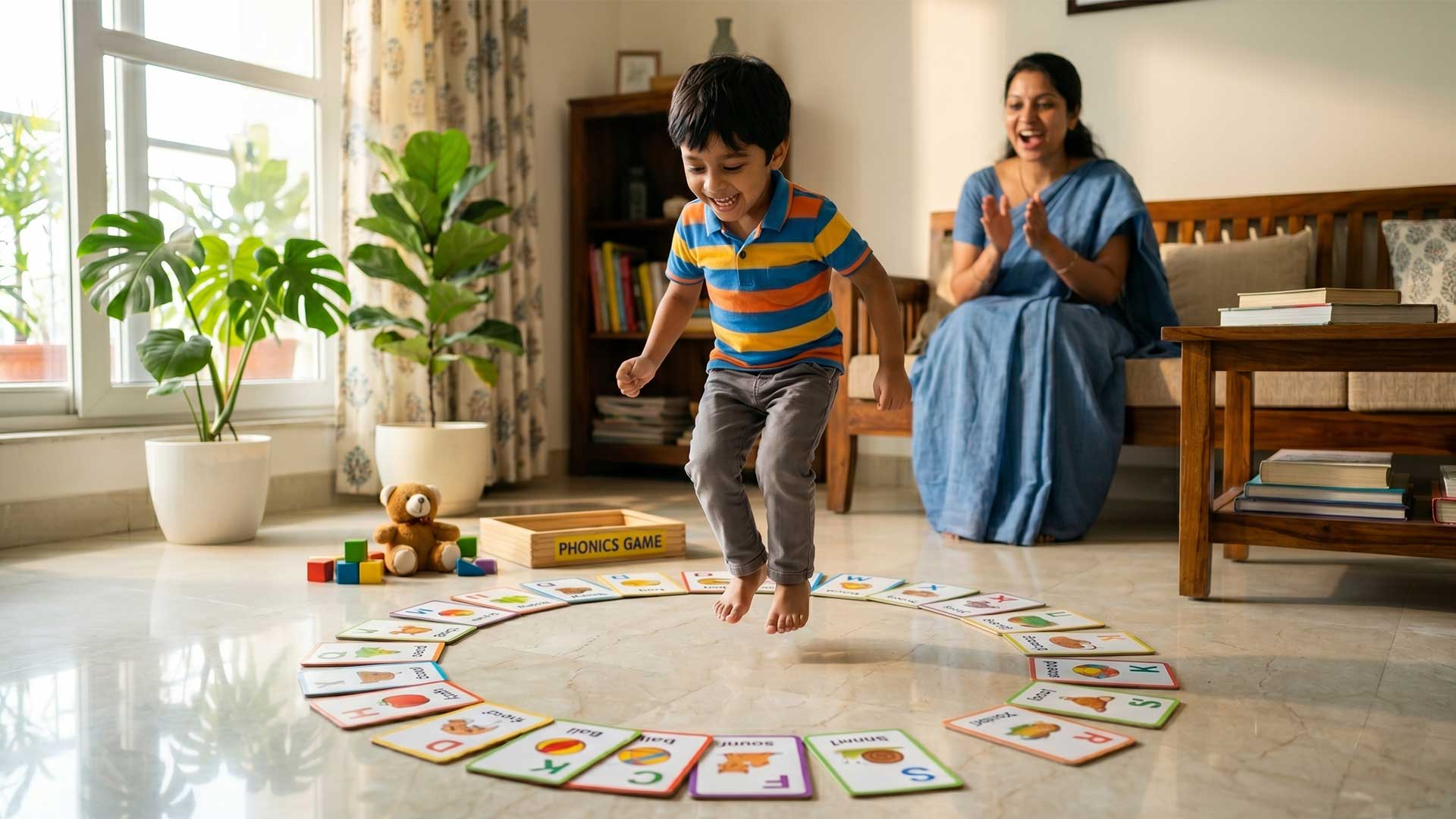
Best Phonics Games for 4-Year-Olds
“My child gets bored with letters… what should I do?”
If your 4-year-old runs away from books or phonics practice, it’s not their fault.
👉 Most kids don’t hate learning.
👉 They hate boring learning.
The secret? Turn phonics into games, not lessons.
Why Phonics Feels Hard for Kids
At age 4, children:
• Learn through play, not repetition
• Need movement + visuals
• Get distracted easily
👉 So traditional “repeat after me” methods don’t work.
7 Best Phonics Games (Easy + Fun at Home)
1. Sound Treasure Hunt 🧩
How to play:
• Say a sound: “Find something that starts with B”
• Child finds: ball, book, bag
Why it works:
👉 Connects sounds with real life
2. Jump on the Sound 🎯
How to play:
• Place alphabet cards on floor
• Say a sound, child jumps on correct letter
Why it works:
👉 Movement = better memory
3. Rhyming Game 🎶
How to play:
• Say: “Cat”
• Ask: “What sounds like cat?”
Why it works:
👉 Builds phonemic awareness (key reading skill)
4. Mystery Sound Box 📦
How to play:
• Put objects in a box
• Child guesses sound: “sss” → snake / spoon
Why it works:
👉 Sharpens listening skills
5. Clap the Sounds 👏
How to play:
• Say word: “Dog”
• Child claps for each sound: D–O–G
Why it works:
👉 Helps break words into sounds
6. Match the Letter & Sound 🧠
How to play:
• Show letter “A”
• Ask: “What sound does this make?”
Why it works:
👉 Builds letter-sound connection
7. Phonics Story Time 📖
How to play:
• While reading, emphasize sounds
“B-b-ball”
Why it works:
👉 Learning happens naturally through stories
What Usually DOESN’T Work
🚫 Forcing worksheets
🚫 Making kids sit for long periods
🚫 Expecting perfect pronunciation
🚫 Comparing with other kids
👉 This creates resistance, not learning
A Smarter Way Many Parents Are Using
Instead of randomly trying games…
Many parents now follow structured phonics-based activity systems that:
• Introduce sounds step-by-step
• Use play-based learning
• Build reading confidence early
Platforms like ClassMonitor help by:
• Giving daily phonics activities
• Making learning consistent
• Removing guesswork
Simple Daily Phonics Routine (15–20 mins)
• 5 mins: Sound game (fun activity)
• 5 mins: Letter recognition
• 5 mins: Story or rhyme
• 5 mins: Free play with sounds
👉 Keep it short + enjoyable
Final Thought
Your goal is NOT to make your child read fast.
Your goal is to make them:
✔ Love sounds
✔ Enjoy words
✔ Feel confident
Reading will follow naturally.
FAQs
1. What age should phonics start?
Around 3.5–4 years through play-based activities.
2. How long should I practice phonics daily?
15–20 minutes is enough.
3. What is the best phonics activity?
Sound-based games like treasure hunt and rhyming.
4. My child is not interestedwhat should I do?
Make it playful, reduce pressure, and use interactive games.