
How to Build Storytelling Skills in Kids: Fun Activities for Parents
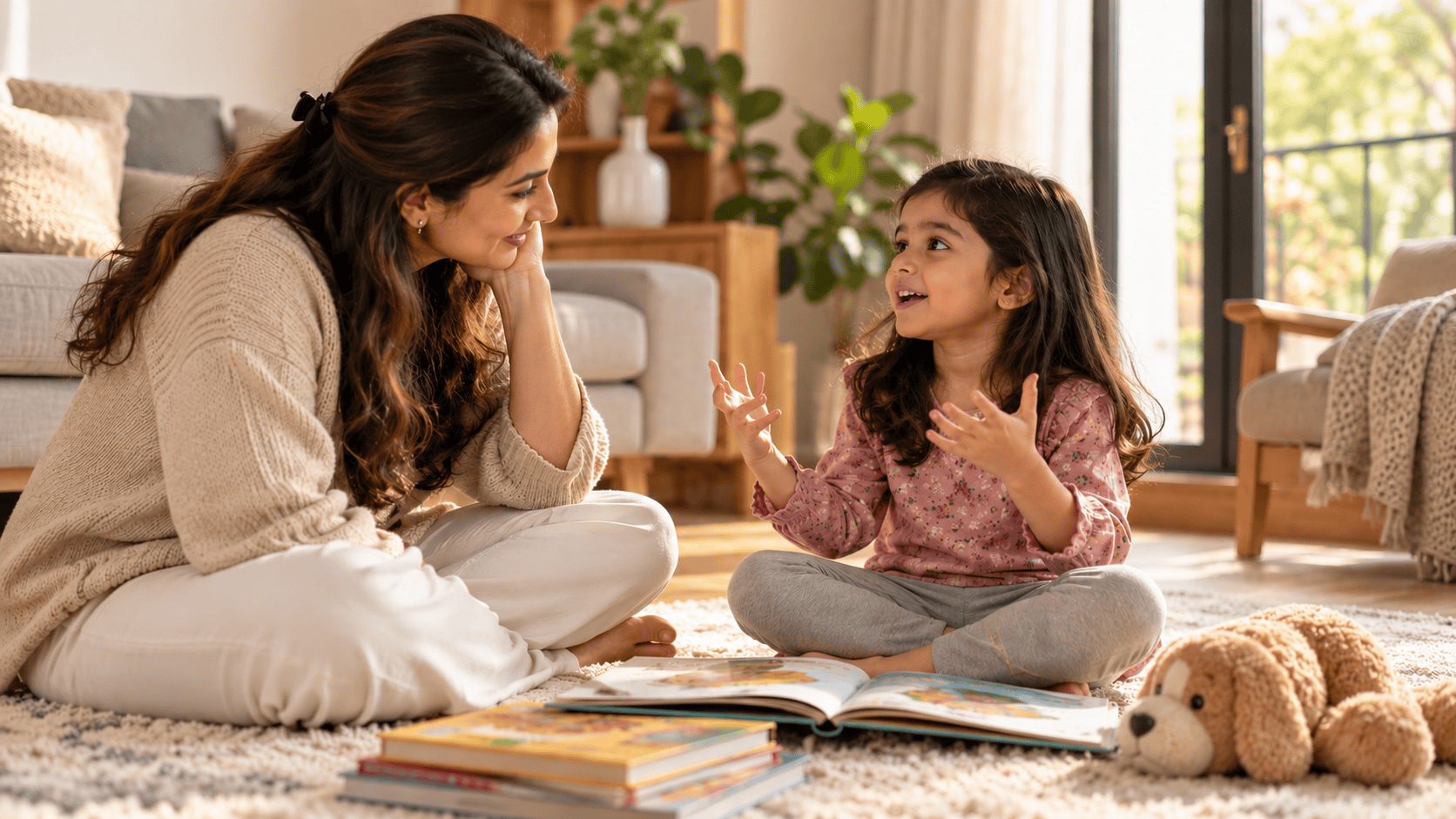
Every child has a story to tell, but not every child finds it easy to express their ideas or organise their thoughts. The good news is that storytelling skills in kids can be developed through books, conversations, pretend play, and creative activities.
In this guide, discover why storytelling matters and explore simple storytelling activities for kids that make learning fun and engaging.
Why Are Storytelling Skills Important for Kids?
Storytelling is much more than telling an interesting story. It helps children organise their thoughts and communicate ideas clearly. When children create or retell stories, they practise vocabulary, sentence formation, listening, memory, sequencing, and comprehension.
Storytelling also supports creativity and imagination. A child who invents a character and decides what happens next is learning to think beyond the obvious. These skills can later support reading, writing, classroom participation, and public speaking.
For younger children especially, storytelling provides a natural way to develop language skills. Instead of memorising new words, they encounter vocabulary in context and learn how words can be used to describe people, places, emotions, and events.
What Are the Best Ways to Build Storytelling Skills in Kids?
1. Read Stories Together and Ask Questions
Reading aloud is one of the simplest ways to improve storytelling skills. Instead of only reading the story from beginning to end, pause occasionally and ask questions such as, “What do you think will happen next?” or “Why do you think the character did that?”
After finishing the story, ask your child to explain what happened in their own words. They don't need to remember every detail. Encourage them to describe the beginning, the important event, and how the story ended.
This helps children understand story structure, sequencing, comprehension, and vocabulary while giving them practice expressing ideas independently.

2. Encourage Storytelling Through Picture Prompts
Pictures are excellent storytelling tools for young children because they provide something concrete to talk about. Show your child a picture of a park, an animal, a family, or an unusual scene and ask them to create a story around it.
You can begin with simple questions: “Who is in the picture?” “Where are they?” “What happened before this?” and “What might happen next?”
As your child becomes more confident, step back and let them create the story independently. This simple storytelling activity develops imagination while helping children practise descriptive language and logical sequencing.

3. Try the “What Happens Next?” Game
Tell your child the beginning of a short story and stop at an exciting moment.
For example: “Mia opened the old box and found a tiny key inside. Suddenly, she heard a sound coming from upstairs…”
Then ask, “What do you think happens next?”
There doesn't have to be one correct answer. Your child can take the story in any direction they want.
This activity encourages creative thinking and helps children understand that stories have characters, settings, events, problems, and resolutions.
4. Let Children Retell Their Favourite Stories
If your child has a favourite book, ask them to become the storyteller.
They can retell the story using pictures, toys, puppets, or simply their imagination. Don't worry if their version isn't exactly the same as the original.
Retelling helps strengthen memory, comprehension, vocabulary, sequencing, and confidence. It also gives parents a chance to notice whether their child understands the events rather than simply remembering individual words.
5. Turn Pretend Play Into Storytelling
Pretend play naturally encourages children to create characters, situations, and dialogue. A cardboard box can become a spaceship. A teddy bear can become a doctor. The living room can become a jungle.
Join your child's imaginary world and ask questions that expand the story: “Where are we going?” “Who lives there?” “What happened to the teddy bear?” or “How will we solve the problem?”
This turns ordinary play into creative storytelling for kids while developing communication, imagination, and problem-solving skills.

6. Use Storytelling Games
Storytelling games can make speaking practice feel less like a lesson. Try a simple chain story where one person starts with a sentence and everyone adds another sentence.
You could begin with, “One morning, a little boy found a mysterious door in his garden…”
Your child decides what happens next, and you continue building the story together.
Storytelling games encourage children to listen carefully, remember what has already happened, and add ideas that make sense within the story.
7. Encourage Children to Tell Stories About Their Day
You don't always need an imaginary story to practise storytelling.
Ask your child to tell you about something that happened during the day. Instead of asking the broad question, “How was school?”, try more specific prompts such as, “What was the funniest thing that happened today?” or “Tell me about something new you learned.”
Encourage them to explain what happened first, next, and last. This helps children practise organising real experiences into a clear sequence while developing everyday communication skills.
How Do Storytelling Activities Benefit Children?
Regular storytelling helps children express ideas clearly, build vocabulary, improve listening, and organise thoughts. It also boosts confidence as children become more comfortable sharing their ideas.
Storytelling supports reading, writing, creativity, and communication by helping children understand characters, events, problems, and solutions. ClassMonitor supports these skills through stories, rhymes, picture talks, and hands-on activities that make learning interactive and engaging.

Expert Tips for Developing Storytelling Skills
Let your child finish their story. Avoid correcting every grammar mistake while they are speaking. First encourage them to communicate their ideas; corrections can come naturally later.
Don't worry about perfect stories. A child's unusual ending or funny character is often a sign that their imagination is working. Encourage creativity before worrying about structure.
Use everyday conversations. Asking children to describe what they saw, explain how something works, or predict what might happen next provides storytelling practice without needing a formal activity.
Add new vocabulary naturally. If your child says, “The dog was big,” you might respond, “Yes, it was enormous!” This introduces richer language without turning the conversation into a vocabulary lesson.
Model storytelling yourself. Tell your child a short story about something that happened to you. Children learn a great deal by listening to how adults describe events, emotions, and experiences.
Frequently Asked Questions
How can I improve my child's storytelling skills?
Give your child regular opportunities to tell, retell, and create stories. Reading together, picture prompts, pretend play, storytelling games, and conversations about daily experiences can all help.
At what age should children start storytelling?
Children begin developing storytelling abilities from a very young age through pretend play, gestures, conversations, and simple narratives. The complexity of their stories naturally develops as their language and thinking skills grow.
What are some fun storytelling activities for kids?
Picture storytelling, story chains, puppet shows, “what happens next?” games, retelling favourite books, and creating stories with toys are simple and engaging options.
How does storytelling help language development?
Storytelling gives children opportunities to practise vocabulary, sentence formation, sequencing, listening, comprehension, and expressing ideas clearly.
Can storytelling improve public speaking skills?
Yes. Storytelling gives children repeated practice organising their thoughts and speaking clearly. As their confidence grows, these skills can support communication and public speaking.
How can shy children become better storytellers?
Start privately with a parent or sibling. Use toys, pictures, or puppets so the child has something to focus on. Avoid forcing them to perform and gradually create opportunities for them to share their stories.
Should I correct my child's grammar while they tell a story?
Constant correction can interrupt the child's confidence and flow. It's usually better to listen first, respond to the story, and model correct language naturally during conversation.
Storytelling skills in kids don't develop through memorising stories or practising speeches alone. They grow through conversation, imagination, play, reading, and opportunities to express ideas.
A bedtime story, a picture on the fridge, a favourite toy, or something funny that happened at school can become an opportunity to practise storytelling.
The goal isn't to make every child a perfect storyteller. It is to help them become comfortable saying, “I have an idea, and I can share it.”
When children learn to organise their thoughts, choose their words, and confidently tell their stories, they are building skills that can support them far beyond childhood.
Related Blogs
1. 9 Fun Ways to Build Confidence in Kids
2. Phonics for Kids: Complete Parent Guide to Early Reading Skills
3. 5 Essential Writing Skills Every Child Must Learn