
Phonics for Kids: Complete Parent Guide to Early Reading Skills
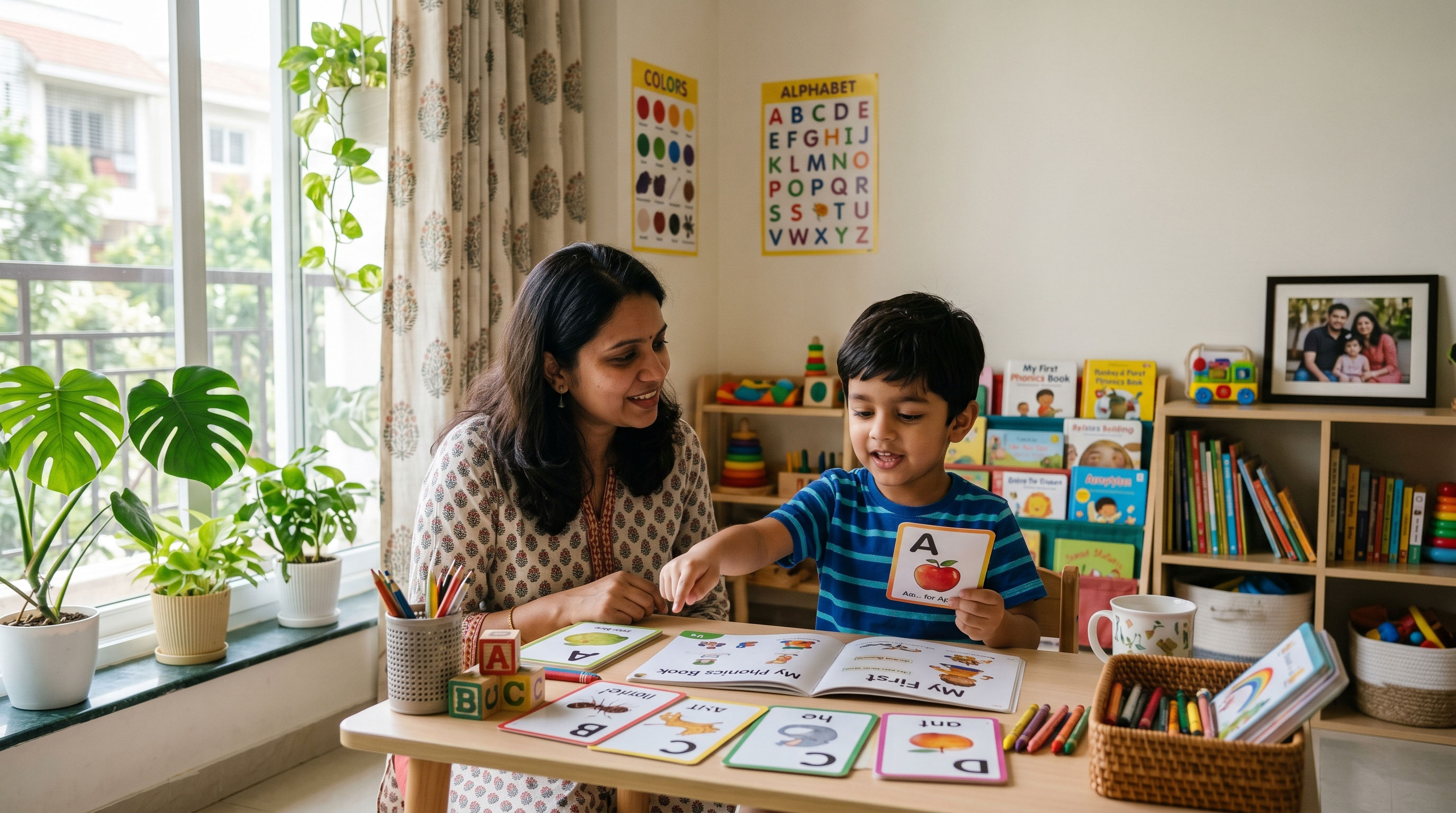
Phonics for Kids: A Complete Parent Guide to Early Reading
What Is Phonics?
Phonics is a method of teaching children how letters and sounds work together to form words.
In simple words, phonics helps children:
- Recognise letter sounds
- Blend sounds into words
- Read independently
- Improve spelling and pronunciation
For example:
- Letter B makes the sound “b”
- Letter C makes the sound “k”
- The word CAT is read by blending:
- c → /k/
- a → /a/
- t → /t/
Phonics is one of the most effective ways to build strong reading skills in young children.
Why Is Phonics Important for Children?
Many children can recite the alphabet but still struggle to read words.
Phonics teaches children how to decode words instead of memorising them.
This helps children:
- Read new words confidently
- Improve vocabulary
- Build spelling skills
- Strengthen communication skills
- Develop reading fluency
- Gain confidence in learning
Children who learn phonics early usually become stronger readers later.
Benefits of Phonics Learning
1. Builds Early Reading Skills
Phonics helps children understand how words are formed. This improves reading confidence from an early age.
2. Improves Spelling
When children understand sounds, they can spell words more accurately.
3. Enhances Communication
Phonics improves pronunciation, listening, and speaking skills.
4. Develops Independent Learning
Children learn how to read unfamiliar words without depending on adults.
5. Makes Learning Fun
Phonics activities include games, songs, flashcards, rhymes, and storytelling.
Signs Your Child May Need Phonics Practice
Your child may benefit from phonics support if they:
- Know letters but cannot read words
- Guess words while reading
- Struggle with sound blending
- Confuse similar sounds
- Avoid reading activities
- Find spelling difficult
These challenges are common and improve with regular phonics practice.
Important Phonics Concepts Parents Should Know
Letter Sounds
Children first learn the sounds letters make.
Example:
- A → /a/
- M → /m/
- S → /s/
Blending
Blending means joining sounds together.
Example:
- d-o-g → dog
- s-u-n → sun
CVC Words
CVC stands for consonant-vowel-consonant words.
Examples:
- cat
- bat
- pen
- dog
These are beginner reading words.
Digraphs
Two letters together making one sound.
Examples:
- sh
- ch
- th
- ph
Sight Words
Frequently used words children learn to recognise quickly.
Examples:
- the
- and
- is
- you
Fun Ways to Teach Phonics at Home
Parents can make phonics learning simple and enjoyable.
Read Aloud Daily
Reading storybooks improves sound recognition and vocabulary.
Use Flashcards
Letter and sound flashcards help children remember phonics sounds.
Play Rhyming Games
Rhyming activities improve sound awareness.
Example:
- cat, bat, hat
Practice Sound Hunts
Ask children to find objects starting with specific sounds.
Example:
- “Find something that starts with B.”
Sing Phonics Songs
Songs make phonics learning engaging and memorable.
Blend Simple Words
Practice simple words like:
- cat
- dog
- map
- sun
Short daily practice sessions work best.
Best Age to Start Phonics
Children can start learning phonics between ages 3 and 5.
Early phonics exposure can begin through:
- Storytelling
- Nursery rhymes
- Sound games
- Alphabet songs
- Picture books
Formal phonics instruction usually starts in preschool or kindergarten.
Why Parents Choose Phonics Learning
Parents prefer phonics because it:
- Builds strong reading foundations
- Supports school readiness
- Improves language development
- Encourages independent reading
- Reduces reading struggles later
Phonics creates confident and curious learners.
Final Thoughts
Phonics is the foundation of reading success.
It helps children connect sounds with letters, read confidently, and improve communication skills.
With consistent practice and playful learning, children can develop strong literacy skills from an early age.
Even 10–15 minutes of phonics practice daily can make a big difference.
FAQs About Phonics
1. What is phonics in simple words?
Phonics is a method of teaching children how letters and sounds work together to form words.
2. Why is phonics important?
Phonics helps children read, spell, and pronounce words correctly.
3. What age should children start phonics?
Most children start phonics learning between ages 3 and 5.
4. What are phonics sounds?
Phonics sounds are the sounds letters make, not their alphabet names.
5. What are CVC words?
CVC words are simple three-letter words like cat, dog, sun, and pen.
6. How can parents teach phonics at home?
Parents can use books, flashcards, rhyming games, songs, and blending activities.
7. How long should children practice phonics daily?
Around 10–15 minutes of daily practice is usually effective.
8. Can phonics improve spelling?
Yes. Understanding sounds helps children spell words more accurately.
9. Why does my child know letters but still struggle to read?
Children may know letter names but still need phonics skills to blend sounds into words.
10. Is phonics useful for preschoolers?
Yes. Phonics helps preschoolers build early reading and communication skills.