
The Fear of Getting It Wrong: Why Some Children Stop Trying to Learn
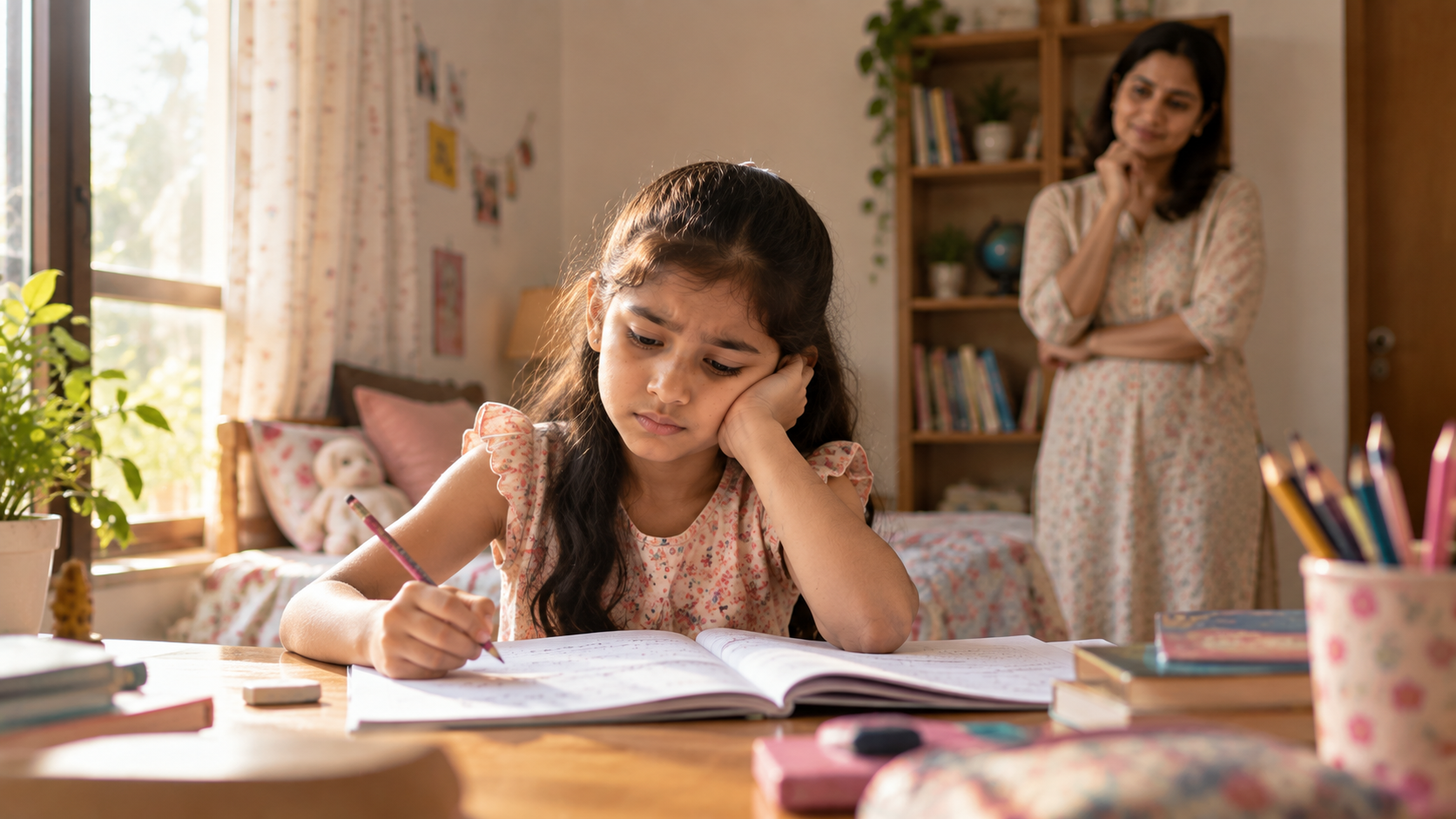
Have you noticed your child erase an answer repeatedly because they are afraid of getting it wrong? Or say, “You do it,” even when they could try themselves?
These may seem like signs of shyness or disinterest, but sometimes they point to a deeper fear of failure in children. When mistakes feel embarrassing or disappointing, children may start avoiding challenges altogether.
Understanding this fear can help parents create a learning environment where mistakes feel safe—and trying again becomes part of learning.
Why Is Fear of Failure Important?

Learning involves trying, making mistakes and trying again. But fear of failure and learning can become closely linked when children worry about being wrong or disappointing others.
They may avoid challenging tasks, stop asking questions or choose only activities they know they can complete. Over time, this can affect their confidence, classroom participation, communication and willingness to try new things.
What Does Fear of Failure Look Like in Children?

Fear of failure in children can show up in everyday behaviours rather than obvious anxiety. A child may avoid answering questions, give up quickly, repeatedly ask if their work is correct, or avoid activities where they might lose.
They may even seem uninterested, saying, “This is boring” or “I don't want to do it.” Instead of asking only, “Why won't my child try?”, consider, “What might they be afraid will happen if they do?”
How Can Parents Help Children Overcome Fear of Failure?
1. Make Mistakes Feel Normal
Children need to hear that mistakes are expected during learning. Instead of immediately correcting an incorrect answer, try exploring it with your child.
You could say, “That's an interesting idea. Let's see what happens if we try it another way.”
This small change can make mistakes feel less like failure and more like information. When children understand that getting something wrong gives them a chance to discover something new, they become more comfortable trying again.

2. Praise Effort, Strategy and Persistence
Praise can strongly influence what children believe matters in learning. Instead of focusing only on correct answers, notice the process behind them.
Tell your child, “You kept trying even when that was difficult,” or “I noticed you found another way to solve it.”
This helps children understand that progress is not always about being the fastest or getting everything right the first time. It is also about effort, patience, problem-solving and persistence.

3. Avoid Comparing Your Child With Other Children
Comparison can unintentionally make learning feel like a competition.
Statements such as “Look how quickly your friend finished” or “Your sister never makes these mistakes” may cause children to focus more on how they perform compared with others than on their own progress.
Instead, compare your child's progress with their previous attempts. “Last week this was difficult, and today you managed to do the first part by yourself” gives children a more meaningful measure of growth.
4. Give Children Permission to Try Before They Know the Answer
Some parents unintentionally teach children to wait for certainty before taking action. But real learning rarely works that way.
Give your child opportunities to make predictions, guess, experiment and explain their thinking. If they get something wrong, resist the urge to immediately provide the answer.
Ask, “What made you choose that answer?”
The goal is not to leave a child struggling unnecessarily. It is to help them understand that thinking, testing and changing their mind are valuable parts of learning.
5. Break Difficult Tasks Into Smaller Steps
A task can feel impossible when a child sees only the final result.
If your child is struggling to read a word, solve a maths problem or prepare a short speech, break the challenge into manageable steps. Celebrate each small success rather than waiting for the entire task to be completed perfectly.
Small successes build learning confidence in children. They help a child think, “I may not know everything yet, but I can figure out the next step.”

6. Change “I Can't” Into “I Can't Yet”
One powerful way to support a child's mindset is to change the language around difficulty.
When your child says, “I can't do this,” try responding with, “You can't do it yet. Let's see what you already know.”
The word “yet” creates room for growth. It tells children that their current ability is not a permanent limit.
This is the foundation of a growth mindset for kids: skills can develop through practice, feedback and persistence.
7. Create Low-Pressure Opportunities to Practise
Children do not always need another test to develop confidence. They need opportunities to practise without feeling judged.
At home, let your child tell a story, explain how a game works, solve a puzzle aloud, read a sentence, demonstrate a skill or teach you something they know.
Keep the focus on participation rather than performance. These experiences can gradually make children more comfortable with speaking, thinking aloud and making mistakes.

How Does Overcoming Fear of Failure Benefit Children?
When children become comfortable with mistakes, they approach learning with more curiosity and confidence. Instead of worrying, “Will I get this right?”, they begin to think, “What can I learn by trying?”
This encourages them to ask questions, practise, learn from feedback and take on new challenges. The goal isn’t to remove disappointment or frustration, but to help children understand that difficult feelings shouldn’t stop them from trying again.
What Should Parents Avoid?
Parents naturally want to protect children from disappointment, but some well-intentioned responses can strengthen the fear of failure.
Avoid making perfection the expectation. Avoid laughing at mistakes, correcting every small error, comparing siblings or classmates, or using marks as the only measure of success.
It is equally important not to remove every challenge simply because a child is uncomfortable. Children need supported opportunities to experience difficulty and discover that they can handle it.
A better message is simple: “It is okay if this is difficult. Let's work through it together.”
Expert Parent Tips for Building Learning Confidence
Focus on progress, not perfection. Ask your child what they learned rather than only asking whether they got everything right.
Let them struggle productively. Give children time to think before stepping in with the answer.
Model mistakes yourself. If you make an error, say, “I got that wrong. Let me try again.” Children learn a great deal by watching adults respond to mistakes.
Celebrate brave attempts. Sometimes the biggest achievement is trying something that feels difficult.
Use encouraging language. Replace “Be careful, don't get it wrong” with “Give it a try and see what you discover.”
Keep learning and be playful. Games, stories, conversations and hands-on activities can create opportunities to practise skills without making every moment feel like an assessment.
How ClassMonitor Can Support Confident Learning
At ClassMonitor, learning is designed to go beyond simply getting the right answer. Its learning ecosystem includes activity-based learning, skill development and live classes across areas such as public speaking, phonics, mental math and other foundational skills.
For children who hesitate because they are worried about making mistakes, structured practice can provide a valuable middle ground: enough guidance to feel supported, while still giving them opportunities to think, participate and build confidence.
The broader goal is to help children become active learners who are willing to explore, communicate and keep trying when something does not work the first time.
A child who says, “I don't know,” may sometimes mean, “I'm scared of being wrong.”
Fear of failure in children can stop them from asking questions, trying difficult tasks or exploring new skills. Children don't need to believe they will always succeed—they need to know that mistakes are a normal part of learning.
When parents make mistakes, feel safe and celebrate effort and progress, children learn a powerful lesson: getting it wrong isn't the opposite of learning; it's part of how learning happens.
Frequently Asked Questions
Why are some children afraid of failure?
Children may fear failure because they worry about disappointing parents, being judged by others, making mistakes publicly or believing that mistakes mean they are not capable. Previous negative experiences can also make challenging tasks feel threatening.
How can I help my child overcome fear of making mistakes?
Start by normalising mistakes. Praise effort and persistence, avoid comparisons, give your child time to think and create low-pressure opportunities to practise new skills. Show them through your own behaviour that mistakes can be corrected.
Does fear of failure affect learning?
Yes. A child who is worried about being wrong may avoid challenging activities, stop asking questions or give up quickly. This can reduce opportunities to practise and learn new skills.
Should parents correct every mistake?
Not necessarily. Correction is useful, but constant correction can make children overly focused on avoiding errors. When appropriate, give children time to identify and correct mistakes themselves.
How do I build confidence in my child?
Give children manageable challenges, recognise progress, encourage independent thinking and create opportunities for them to communicate what they know. Confidence grows when children experience themselves making progress.
What is a growth mindset for kids?
A growth mindset encourages children to see abilities as skills that can develop through practice, learning and persistence. Instead of thinking, “I'm not good at this,” children learn to think, “I haven't learned this yet.”
Recommended Reading
How to Prepare for a School Speech Competition: A Parent's Complete Guide
How to Teach Discipline to Kids Without Punishment
7 Easy Phonics Games to Teach Your 4-Year-Old at Home