
What Is Phonics? A Complete Beginner's Guide for Indian Parents
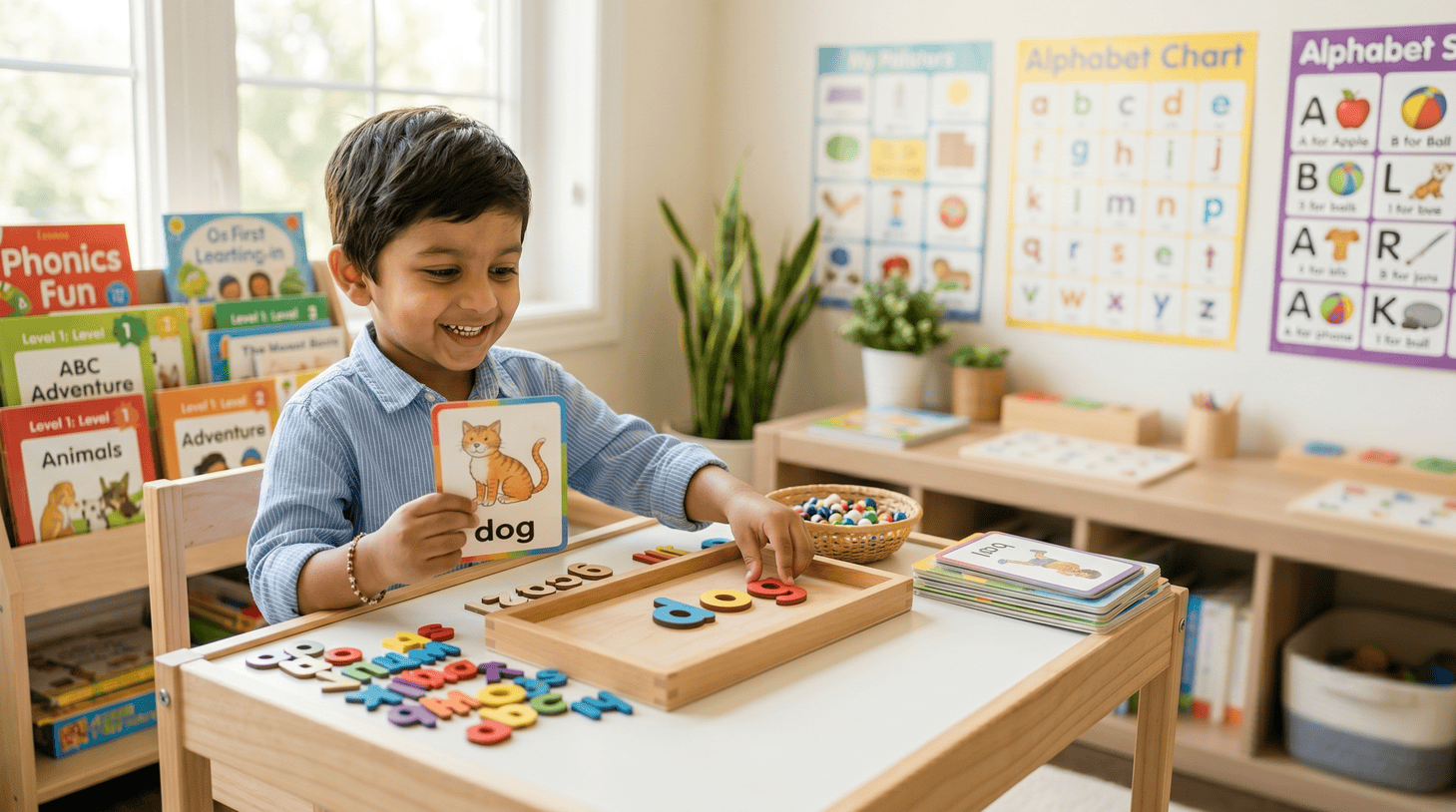
What Is Phonics?
A Complete Beginner's Guide for Indian Parents
Many Indian parents have heard the word phonics, but few truly understand what it means.
Some think phonics is simply teaching the alphabet. Others believe it's another English subject taught in school. Many parents are surprised when they discover that phonics is actually the foundation of reading.
If you've ever wondered:
- What is phonics?
- Why is everyone talking about it?
- At what age should my child start phonics?
- Is phonics really necessary?
This guide will answer everything in simple language.
What Is Phonics?
Phonics is a method of teaching children how letters and letter combinations represent sounds.
Instead of memorizing words, children learn the sounds that letters make and then blend those sounds together to read words.
For example:
- Letter s makes the sound /s/
- Letter a makes the sound /a/
- Letter t makes the sound /t/
When children blend these sounds together:
/s/ + /a/ + /t/ = sat
This process helps children decode and read new words independently.
Simply put:
Phonics teaches children how to read by connecting sounds to letters.
Phonics vs Alphabet: What's the Difference?
This is where many Indian parents get confused.
Learning the Alphabet
Children learn letter names:
- A = "Ay"
- B = "Bee"
- C = "See"
Learning Phonics
Children learn letter sounds:
- A = /a/
- B = /b/
- C = /k/
Knowing the alphabet is important, but it does not automatically teach a child how to read.
For example:
A child may know all 26 letter names but still struggle to read simple words.
Phonics bridges that gap.

How Does Phonics Work?
Phonics is usually taught in stages.
Step 1: Learn Letter Sounds
Children first learn the sounds of letters.
Examples:
- s
- a
- t
- p
- i
- n
Step 2: Blend Sounds
Children combine sounds to form words.
Examples:
- c-a-t = cat
- d-o-g = dog
- s-u-n = sun
Step 3: Segment Words
Children break words into individual sounds.
Example:
Dog → d-o-g
This improves both reading and spelling.
Step 4: Learn Digraphs
Children learn that some letters work together to make one sound.
Examples:
- sh
- ch
- th
- ee
- ai
Step 5: Read Sentences
As confidence grows, children begin reading short stories and sentences independently.
Benefits of Phonics for Kids
Phonics gives children a system for reading.
Instead of guessing words from pictures or memorizing hundreds of sight words, children learn how to decode words on their own.
Benefits include:
✅ Faster reading development
✅ Better pronunciation
✅ Improved spelling
✅ Stronger vocabulary
✅ Increased reading confidence
✅ Greater independence while reading
Children who understand phonics often become more confident readers because they know how to figure out unfamiliar words.

At What Age Should Phonics Begin?
Most children are ready to start phonics between 3 and 6 years of age.
General guideline:
Ages 3–4
- Listening games
- Rhyming activities
- Sound awareness
Ages 4–5
- Letter-sound recognition
- Beginning blending activities
Ages 5–6
- Reading simple words
- Sentence reading
- Digraphs and advanced phonics
Every child develops at a different pace, so the focus should be on readiness rather than rushing.
Phonics in Indian Schools: What's Missing?
Many schools in India introduce English early, but phonics instruction is often inconsistent.
Common challenges include:
Focus on Memorization
Children memorize spellings and words without understanding how sounds work.
Emphasis on Writing Before Reading
Many children are expected to write words before they have mastered decoding them.
Limited Speaking Practice
Reading and pronunciation are not always taught systematically.
Large Classroom Sizes
Teachers may not have enough time for individual phonics support.
As a result, some children know letter names but struggle to read unfamiliar words confidently.
Signs Your Child May Benefit From Phonics
Your child may need phonics support if they:
- Know the alphabet but cannot read words
- Guess words while reading
- Avoid reading activities
- Struggle with spelling
- Mix up sounds frequently
- Lack confidence while reading aloud
The good news is that these challenges can often be addressed through structured phonics instruction.
How ClassMonitor Phonics Classes Work
At ClassMonitor, phonics is taught through engaging, child-friendly activities that make learning enjoyable.
Children learn through:
- Interactive games
- Story-based learning
- Sound blending activities
- Visual and hands-on exercises
- Reading practice
- Confidence-building exercises
Our structured phonics program helps children move from recognizing sounds to reading words, sentences, and stories independently.
The focus is not just on reading—but on building a lifelong love for learning.

Final Thoughts
Reading is one of the most important skills a child will ever learn.
Phonics provides the foundation that makes reading easier, faster, and more enjoyable.
If your child is just beginning their literacy journey, starting with phonics can make a tremendous difference in their confidence and success.
Remember:
Every expert reader once started with a single sound.
The earlier children develop strong phonics skills, the stronger their reading foundation becomes.
Ready to Start Your Child's Phonics Journey?
Book a FREE ClassMonitor phonics demo and discover how interactive, play-based learning can help your child become a confident reader.
👉 Explore our guide: What Is the Best Age to Start Phonics?
👉 Book your FREE demo class today.
FAQs
1. What is phonics in simple words?
Phonics is a method of teaching reading by helping children understand the relationship between letters and sounds. Children learn letter sounds and then blend them together to read words.
2. Why is phonics important for children?
Phonics helps children become confident readers by teaching them how to decode words independently. It improves reading fluency, spelling, pronunciation, and overall literacy skills.
3. At what age should a child start phonics?
Most children can begin phonics between the ages of 3 and 6 years. Younger children can start with sound-awareness activities, while children aged 4–6 can begin learning letter sounds and blending words.
4. Is phonics necessary if my child already knows the alphabet?
Yes. Knowing the alphabet means knowing letter names, while phonics teaches letter sounds. A child may know all 26 letters but still struggle to read without phonics instruction.
5. What is the difference between phonics and traditional reading methods?
Traditional reading methods often rely on memorizing words. Phonics teaches children how to decode unfamiliar words using letter-sound relationships, making them more independent readers.
6. How long does it take a child to learn phonics?
The timeline varies depending on age, consistency, and practice. Most children begin reading simple words within a few months of structured phonics instruction.
7. Can phonics help with spelling?
Yes. Phonics improves spelling because children learn how sounds correspond to letters and letter patterns. This helps them spell unfamiliar words more accurately.
8. Is phonics suitable for Indian children?
Absolutely. Phonics is especially beneficial for Indian children learning English as a second language because it improves pronunciation, reading fluency, and vocabulary development.