
Speaking Activities for Toddlers | 15 Fun Language Games for Early Learning
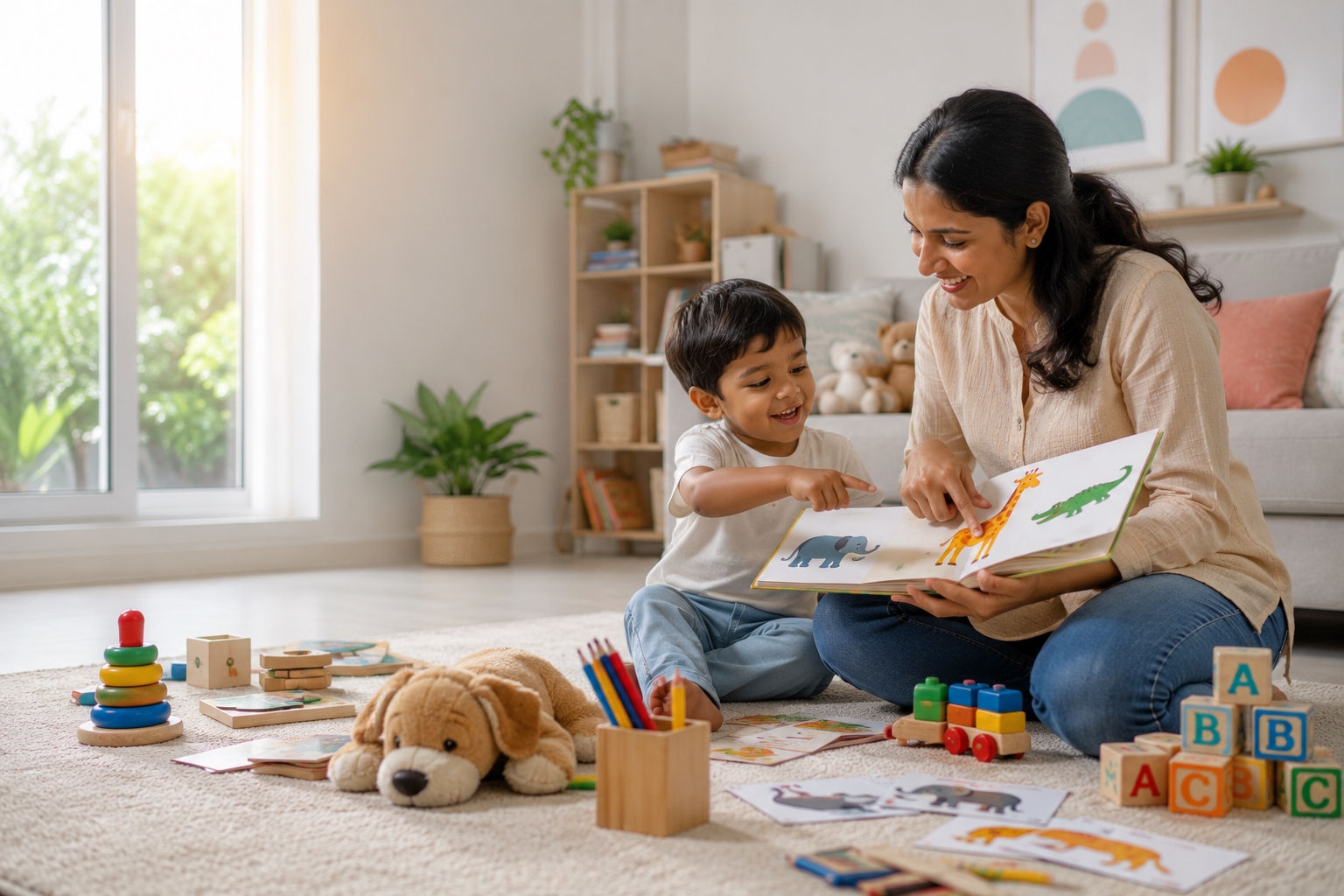
Speaking activities for toddlers help develop vocabulary, communication skills, listening ability, and confidence through playful interactions. Activities like reading books, singing nursery rhymes, pretend play, naming objects, storytelling, action games, and everyday conversations encourage toddlers to express themselves naturally while making language learning fun and engaging.
Speaking Activities for Toddlers: 15 Fun Ways to Build Language and Communication Skills
The first few years of a child's life are filled with incredible learning. From saying their first word to forming simple sentences, toddlers develop communication skills at a remarkable pace. During this stage, every conversation, song, story, and game contributes to their language development.
Parents often wonder, "How can I help my toddler speak more confidently?" The answer is simple—through fun, everyday speaking activities.
Children don't learn language by memorizing words. They learn by listening, observing, playing, and interacting with the people around them. Simple activities woven into daily routines help toddlers improve vocabulary, sentence formation, listening skills, pronunciation, and confidence.
In this guide, you'll discover easy, screen-free speaking activities that encourage natural communication while strengthening your child's language development.
Why Speaking Activities Are Important for Toddlers
Speaking activities do much more than teach children new words. They help toddlers understand language, express emotions, and build meaningful connections.
Regular speaking practice helps toddlers:
- Build vocabulary naturally
- Improve listening skills
- Express thoughts and emotions
- Strengthen memory and concentration
- Develop confidence while speaking
- Improve pronunciation
- Enhance social interaction
- Prepare for preschool and kindergarten
Language develops best when children hear conversations and actively participate in them.

Language Development Milestones for Toddlers
Every child develops at their own pace, but these milestones offer a general guide.
| Age | Expected Language Skills |
| 12–18 months | Says a few simple words, follows simple instructions |
| 18–24 months | Uses 20–50+ words, combines two words together |
| 2–3 years | Speaks in short sentences, asks simple questions, follows two-step instructions |
If your child develops slightly earlier or later, that's often normal. Consistent interaction and practice play a significant role in language growth.
15 Best Speaking Activities for Toddlers
1. Read Picture Books Together
Books introduce toddlers to new words and ideas.
Point to pictures and ask:
- "What is this?"
- "Can you find the dog?"
- "What sound does the cow make?"
Reading every day strengthens vocabulary and comprehension.
2. Sing Nursery Rhymes
Songs naturally teach rhythm, pronunciation, and repetition.
Popular rhymes include:
- Twinkle Twinkle Little Star
- Wheels on the Bus
- Old MacDonald Had a Farm
- If You're Happy and You Know It
Encourage your toddler to sing along and perform the actions.
3. Play Animal Sound Games
Show animal toys or picture cards.
Ask:
"What sound does the lion make?"
"What does the duck say?"
Animal sounds help children imitate speech while having fun.
4. Name Everyday Objects
Daily routines offer endless learning opportunities.
While cooking, bathing, or shopping, label objects:
- Spoon
- Apple
- Chair
- Door
- Ball
Repeat the words naturally during conversations.
5. Pretend Play Kitchen
Pretend cooking encourages conversations.
Use toy vegetables, utensils, and plates.
Ask questions like:
- "What are we cooking today?"
- "Who wants some soup?"
Pretend play encourages sentence building.
6. Talk During Daily Routines
Simple conversations throughout the day build language.
For example:
"I'm putting on your shoes."
"Let's wash your hands."
"Can you find your teddy?"
Toddlers learn best from real-life experiences.
7. Puppet Conversations
Puppets make speaking exciting.
Create simple conversations:
"Hello!"
"What's your name?"
"How are you today?"
Shy toddlers often speak more confidently through puppets.
8. Mirror Talk
Stand together in front of a mirror.
Practice:
- Smiling
- Naming facial expressions
- Saying simple words
- Making funny faces
Mirror activities improve pronunciation and confidence.
9. Toy Telephone Game
Use toy phones to pretend you're calling Grandma or a friend.
Encourage conversations such as:
"Hello!"
"How are you?"
"I miss you."
This introduces the basics of conversation.
10. Storytelling with Toys
Use dolls, stuffed animals, or toy cars to create simple stories.
Example:
"The teddy is sleepy."
"The bunny is hungry."
Stories encourage imagination and language development.
11. Follow Simple Instructions
Turn everyday tasks into games.
Ask your toddler to:
- Clap your hands.
- Touch your nose.
- Bring the red ball.
- Put the book on the table.
Listening and speaking develop together.
12. Bubble Talk
Blow bubbles and ask:
"Can you catch the big bubble?"
"Where did it go?"
Children naturally become excited and use more words while playing.
13. Treasure Basket Game
Fill a basket with safe household objects.
Ask your toddler to:
- Name each object
- Describe its color
- Tell what it's used for
This builds vocabulary naturally.
14. Guess the Sound
Make everyday sounds:
- Ring a bell
- Clap hands
- Tap a spoon
- Shake keys
Ask:
"What made that sound?"
Listening carefully improves speech development.
15. Show and Tell
Let your toddler choose a favorite toy.
Encourage them to answer simple questions:
- What is it?
- What color is it?
- Why do you like it?
This activity builds confidence and expressive language.
Everyday Opportunities to Encourage Speaking
Language learning doesn't require special lessons.
Use everyday moments like:
Morning
Talk about the weather and daily plans.
Meal Time
Name foods, colors, and tastes.
Grocery Shopping
Identify fruits, vegetables, and household items.
Outdoor Walks
Talk about birds, trees, flowers, and vehicles.
Bath Time
Describe actions like wash, splash, pour, and dry.
Bedtime
Read stories and ask simple questions.
Tips for Parents to Encourage Speaking
- Speak slowly and clearly.
- Make eye contact while talking.
- Listen patiently without interrupting.
- Ask open-ended questions.
- Expand your child's responses.
- Celebrate every new word.
- Reduce unnecessary screen time.
- Read together every day.
- Repeat new vocabulary naturally.
- Keep conversations fun and pressure-free.

Mistakes Parents Should Avoid
Avoid:
❌ Correcting every word immediately
❌ Speaking for your child
❌ Comparing your child with others
❌ Interrupting when they're trying to speak
❌ Asking only yes/no questions
❌ Overusing screens instead of conversations
Children learn best when they feel relaxed and encouraged.
Signs Your Toddler May Need Extra Language Support
Consider speaking with a pediatrician or speech-language pathologist if your toddler:
- Says very few words after 18 months
- Doesn't respond to simple instructions
- Rarely makes eye contact while communicating
- Doesn't imitate sounds or words
- Struggles to combine words by age two
- Shows frustration because they cannot communicate
Early support can make a meaningful difference.
How ClassMonitor Supports Early Language Development
At ClassMonitor, we believe children learn best through meaningful play and interaction.
Our activity-based learning approach encourages toddlers to develop communication skills through:
- Storytelling sessions
- Interactive conversations
- Rhymes and action songs
- Vocabulary-building activities
- Role-play and pretend play
- Picture-based learning
- Hands-on educational games
- Parent-child learning experiences
By combining fun with structured learning, ClassMonitor helps toddlers become confident communicators while nurturing curiosity, creativity, and a lifelong love for learning.
Frequently Asked Questions
What are the best speaking activities for toddlers?
Reading books, singing nursery rhymes, pretend play, naming everyday objects, storytelling, puppet shows, and simple conversations are among the best speaking activities for toddlers.
How can I encourage my toddler to talk more?
Talk with your toddler throughout the day, read together, sing songs, ask open-ended questions, respond positively to their attempts to communicate, and encourage imaginative play.
At what age should toddlers start talking?
Most toddlers begin saying simple words around 12 months, combine two words between 18–24 months, and speak in short sentences by age three.
Can reading improve my toddler's speaking skills?
Yes. Reading introduces new vocabulary, improves listening skills, strengthens comprehension, and encourages toddlers to imitate words and phrases.
How often should I practice speaking activities?
Short, playful conversations and language activities every day are more effective than occasional long practice sessions. Even 15–20 minutes of focused interaction can make a big difference.
Are screen-based language apps better than talking with parents?
No. Real conversations, play, and face-to-face interaction are far more effective for developing speaking and communication skills than passive screen time.
Conclusion
Helping your toddler become a confident communicator doesn't require expensive tools or formal lessons. Every story you read, every song you sing, every question you ask, and every playful conversation you share contributes to their language development.
By making speaking activities part of everyday life, you're helping your child build vocabulary, confidence, listening skills, and social communication—all essential foundations for future learning.
At ClassMonitor, we believe the best learning happens through joyful experiences. With engaging, play-based activities and meaningful parent-child interactions, toddlers can develop strong communication skills while enjoying every step of their learning journey.