
Are We Preparing Children for School—or Just Preparing Them to Pass Tests?
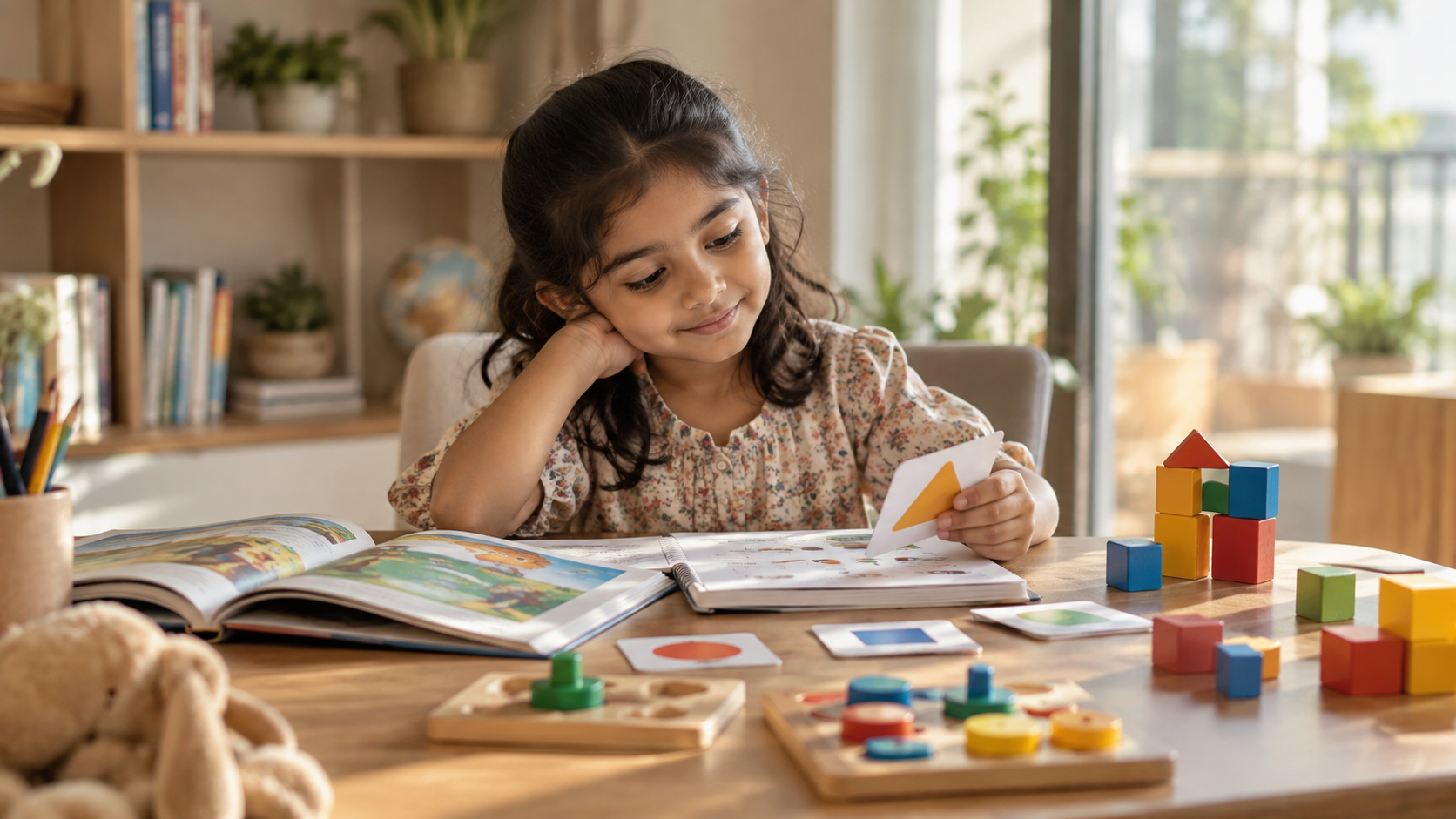
School readiness skills go far beyond knowing letters, numbers, or scoring well on tests. Children also need communication, problem-solving, critical thinking, confidence, creativity, curiosity, and the ability to learn independently. But in a world where academic performance is often measured through worksheets, assessments, and examinations, are we preparing children for school—or simply preparing them to pass tests?
Introduction
For many parents, preparing a child for school means teaching them the alphabet, numbers, spellings, reading, writing, and basic mathematics. These foundational academic skills are certainly important. However, being ready for school involves much more than being able to answer questions correctly.
A child may know how to memorise a spelling list but struggle to use those words in conversation. They may solve a familiar math problem but become confused when the question is presented differently. They may score well on a worksheet but hesitate to ask a question, explain an idea, work with another child, or try again after making a mistake.
This raises an important question: What does it really mean to prepare children for school?
True school readiness combines academic foundations with the cognitive, social, emotional, and communication skills children need to participate confidently in learning. At ClassMonitor, this broader approach is reflected through activity-based learning, experiential learning, logical thinking, creativity, language development, and problem-solving rather than focusing only on academic performance.
Why Are School Readiness Skills Important?
School is not simply a place where children receive information. It is an environment where they are expected to listen, communicate, think, make decisions, solve problems, work with others, manage frustration, and gradually become more independent learners.
This is why school readiness skills should include both what a child knows and how they use what they know.
Academic foundations help children understand classroom concepts, while critical thinking and problem-solving help them apply those concepts. Communication allows them to express their ideas, and confidence encourages them to participate. Creativity helps them approach unfamiliar situations, while curiosity motivates them to keep learning.
When these abilities develop together, children are better prepared not only for school assessments but also for the everyday challenges of learning.
What Skills Do Children Really Need for School?
1. Academic Foundations Without Excessive Memorisation
Children do need foundational literacy and numeracy skills. Recognising sounds, developing vocabulary, understanding numbers, identifying patterns, and beginning to read and write can make the transition into formal schooling easier.
However, learning should not stop at memorisation. A child should gradually understand what they are learning and be able to use it in different situations.
For example, instead of only memorising that 5 + 3 = 8, children can be encouraged to find different ways to make eight or discover examples of addition in everyday situations. This turns an answer into an opportunity to understand.
The goal is not to eliminate worksheets or practice. It is to balance them with meaningful experiences.

2. Critical Thinking and Problem-Solving
One of the most valuable skills children need for school is the ability to think beyond the obvious answer.
Children encounter problems every day: a puzzle they cannot solve, a toy that does not work, a disagreement with a sibling, or a building that keeps falling down. These ordinary moments can become opportunities for problem-solving.
Instead of immediately providing the answer, parents can ask, “What could you try next?” or “Why do you think that happened?”
Questions like these encourage children to analyse situations, make predictions, test ideas, and learn from mistakes.
This is very different from teaching children that every question has one memorised answer.

3. Communication Skills
A child can understand a concept and still struggle to communicate it.
Being able to explain an idea, ask for help, describe what happened, listen to another person, and participate in a discussion are essential classroom skills.
Storytelling, pretend play, family conversations, picture discussions, and simple presentations can help children practise communication naturally.
ClassMonitor also emphasises communication and public speaking as important parts of children's development because confident communication can support classroom participation and broader academic experiences.
4. Curiosity and a Love of Learning
Perhaps one of the most overlooked forms of school readiness is curiosity.
A child who constantly asks “Why?” is not necessarily being difficult. They are trying to understand the world.
When children are encouraged to investigate, experiment, ask questions, and discover answers, learning becomes something they actively participate in rather than something they simply receive.
Simple activities such as observing plants, experimenting with water, building structures, sorting objects, or creating stories can turn everyday experiences into learning opportunities.
Hands-on STEM activities, for example, can encourage children to observe, predict, experiment, and solve problems while learning through play.

5. Confidence and Independence
Preparing children for school also means helping them believe, “I can try.”
A child does not need to know every answer before entering school. More importantly, they should feel comfortable making an attempt, asking questions, making mistakes, and trying again.
Parents can build independence by allowing children to complete age-appropriate tasks themselves. Let them choose between two activities, organise their learning materials, attempt a puzzle before receiving help, or explain how they reached an answer.
Small opportunities for independence can gradually build confidence.
6. Social and Emotional Skills
School involves people.
Children need to listen to others, take turns, share resources, cooperate, handle disappointment, follow routines, and manage emotions.
These skills are sometimes treated as separate from academic learning, but they directly influence how comfortably a child participates in the classroom.
A child who can recognise frustration and ask for help may be better equipped to continue learning than a child who believes every mistake means failure.
Are We Preparing Children for Tests Instead of Learning?
Tests are not inherently bad. Assessments can help teachers understand what children have learned and where they need support.
The problem arises when test preparation becomes the definition of learning.
When children are repeatedly encouraged to memorise answers without understanding concepts, they may become good at recalling information but struggle when they encounter unfamiliar questions.
Real learning should survive outside the worksheet.

If a child learns about money, can they recognise coins while playing shop? If they learn vocabulary, can they use new words in conversation? If they learn addition, can they apply it while counting objects? If they learn about patterns, can they notice patterns in everyday life?
These applications show whether knowledge has become understanding.
How Can Parents Prepare Children for School Without Making Learning Feel Like Test Preparation?
Make Everyday Activities Learning Opportunities
Cooking can introduce measurement. Shopping can introduce money and mental maths. Reading stories can develop vocabulary and comprehension. Building with blocks can encourage spatial reasoning and problem-solving.
Children do not need every learning experience to look like a lesson.
Ask Questions Instead of Always Giving Answers
Try asking, “What do you think will happen?” “How did you figure that out?” or “Can you find another way?”
These questions encourage children to explain their thinking rather than simply produce an answer.
Encourage Learning Through Play
Play gives children opportunities to experiment, communicate, negotiate, create, and solve problems.
This is why activity-based learning can be valuable during the early years. ClassMonitor's learning approach combines academic concepts with activities, games, creative experiences, and skill development to make learning more experiential.
Focus on Progress, Not Just Scores
A score tells you how a child performed on a particular assessment. It does not always tell you how confidently they approached a problem, whether they understood the concept, or how much effort they invested.
Instead of asking only, “What did you score?”, parents can also ask, “What did you learn today?” or “What was challenging?”
These conversations shift attention from performance alone to the learning process.
How Does Holistic Learning Benefit Children?
A holistic learning approach helps children develop multiple abilities together rather than treating academic knowledge as the only measure of progress.
Literacy supports communication. Numeracy supports logical thinking. Creative activities encourage imagination. Problem-solving develops reasoning. Group activities build collaboration. Speaking activities strengthen confidence.
These skills overlap and reinforce one another.
For example, storytelling is not simply an English activity. It can strengthen vocabulary, listening, sequencing, memory, imagination, communication, and confidence.
Similarly, mental maths can go beyond calculation speed by developing number sense, logical thinking, confidence, and problem-solving.
This is what makes learning meaningful: children begin to understand not only what they are learning, but why and where they can use it.

Parent Tips for Building School Readiness Skills
Start small. You do not need hours of structured teaching every day. A few meaningful conversations, games, stories, and problem-solving activities can become part of your child's routine.
Let children struggle productively. If a puzzle is difficult, resist the urge to immediately solve it for them. Give them time to think and experiment.
Ask “why” and “how.” These questions reveal whether children understand an idea instead of simply remembering an answer.
Celebrate questions. Curiosity is an important part of learning. Encourage children to ask questions even when you do not immediately know the answer.
Balance academics with life skills. Reading and maths matter, but so do communication, independence, creativity, confidence, and problem-solving.
Make learning active. Whenever possible, allow children to touch, move, build, speak, create, compare, test, and discover.
Recommended ClassMonitor Reads
If you want to explore practical ways to build skills beyond traditional test preparation, these ClassMonitor resources can help:
- How Public Speaking Helps Children Perform Better in School
- 15 Fun Mental Math Activities for Kids
- 30+ Easy STEM Activities for Kids at Home
- Storytelling Activities for Children
- How to Improve Public Speaking Skills in Children
Frequently Asked Questions
What are school readiness skills?
School readiness skills are the abilities children need to participate successfully in school. They include foundational academic skills along with communication, problem-solving, critical thinking, confidence, independence, social skills, emotional regulation, and curiosity.
How can parents prepare children for school?
Parents can prepare children for school by combining age-appropriate academic practice with reading, conversations, play, storytelling, problem-solving, hands-on activities, and opportunities for independence.
Is test preparation enough to prepare a child for school?
No. Test preparation can help children practise academic concepts, but school readiness involves much more. Children also need to communicate, think critically, solve unfamiliar problems, manage emotions, collaborate, and learn independently.
Why is play important for school readiness?
Play allows children to practise problem-solving, communication, creativity, decision-making, cooperation, and persistence in a natural way. It can make learning active and meaningful rather than focused only on memorisation.
How does ClassMonitor support holistic learning?
ClassMonitor provides learning kits, skill boosters, live classes, and activity-based resources designed around areas such as linguistic skills, logical thinking, cognitive skills, creativity, and experiential learning. Its offerings include academic learning alongside skill development.
Preparing a child for school should never be reduced to preparing them for the next test.
Academic foundations matter, but children also need to know how to think, communicate, question, create, solve problems, handle mistakes, and keep trying when something feels difficult.
The real goal of school readiness is not a child who can memorise the most answers. It is a child who walks into the classroom with curiosity, confidence, and the willingness to learn.
Because ultimately, school is not just about getting the right answer.
It is about helping children become capable of finding their own answers.
To explore activity-based and holistic learning resources for children, visit ClassMonitor.


