
15 Mental Math Games for Kids That Make Learning Fun | ClassMonitor
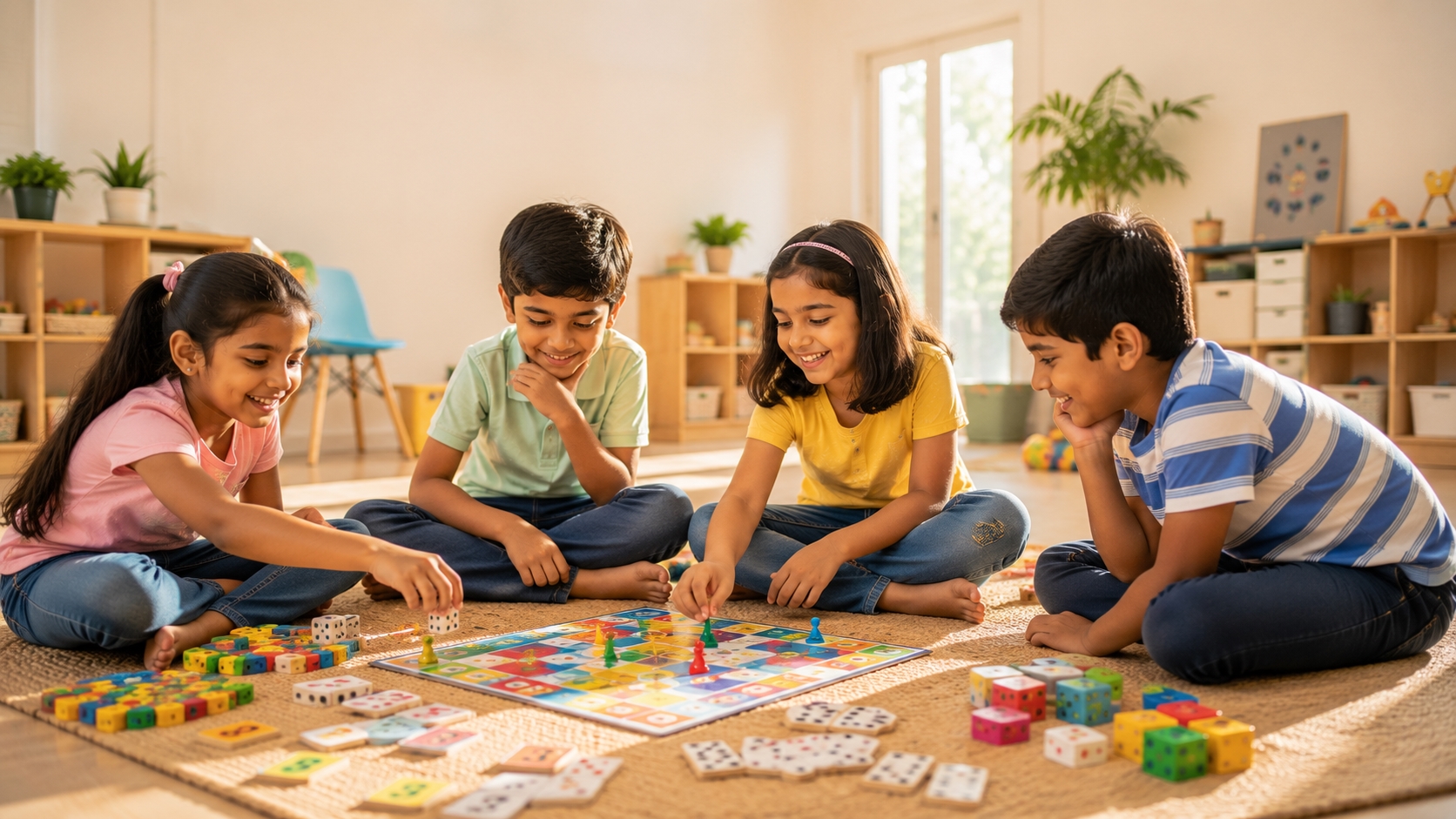
Mental Math Games That Make Learning Fun: 15 Exciting Activities to Build Strong Math Skills
Mental math games are fun activities that help children solve math problems without using paper or calculators. These games improve number sense, calculation speed, memory, logical thinking, and confidence. Playing mental math games for just 10–15 minutes a day makes learning enjoyable while strengthening essential math skills for school and everyday life.
Mental Math Games That Make Learning Fun
Many children think math is all about worksheets, homework, and memorizing formulas. But math doesn't have to feel boring or stressful. One of the best ways to build confidence and improve calculation skills is through mental math games.
Games transform learning into an exciting challenge where children solve problems, recognize number patterns, and think creatively without even realizing they're practicing math. Whether you're a parent looking for screen-free activities at home or a teacher searching for engaging classroom ideas, mental math games encourage children to enjoy numbers while developing lifelong problem-solving skills.
In this guide, you'll discover 15 easy mental math games that make learning fun while improving speed, accuracy, and confidence.
What Are Mental Math Games?
Mental math games are playful activities that encourage children to solve calculations without using calculators or writing down every step. Instead, children use logic, number patterns, estimation, and quick thinking to find answers mentally.
Unlike traditional worksheets, these games create a relaxed learning environment where mistakes become opportunities to learn. As children play regularly, they naturally improve their number fluency, concentration, and confidence.

Benefits of Mental Math Games
Mental math games offer much more than faster calculations. They help children develop important life skills, including:
- Improve calculation speed and accuracy
- Build strong number sense
- Develop logical and critical thinking
- Strengthen memory and concentration
- Boost confidence in mathematics
- Encourage problem-solving skills
- Make learning enjoyable and stress-free
- Reduce dependence on calculators
- Support better performance in school
- Promote screen-free family learning time
Quick Tip: Even 10 minutes of mental math games each day can make a noticeable difference in your child's confidence and mathematical fluency.
Best Age to Start Mental Math Games
| Age Group | Recommended Activities |
| 4–5 Years | Counting games, matching numbers, simple addition |
| 6–8 Years | Dice games, flashcards, skip counting, bingo |
| 9–12 Years | Strategy games, estimation, multiplication challenges, shopping math |
Remember, every child learns differently. Choose games that match your child's ability rather than their age.
15 Mental Math Games That Make Learning Fun
1. Number Bingo
Write different numbers on a bingo card. Call out simple addition, subtraction, or multiplication questions instead of numbers. Children mark the correct answers.
Skills Developed: Number recognition, calculation speed
2. Dice Addition Challenge
Roll two or three dice and ask children to mentally add the numbers together as quickly as possible.
Skills Developed: Quick addition, concentration
3. Flashcard Sprint
Show math flashcards one by one. Children answer within five seconds.
Skills Developed: Fast recall, confidence
4. Shopping Math
While grocery shopping, ask your child to mentally add prices or estimate the total bill.
Example:
"If apples cost $4 and milk costs $3, how much will both cost together?"
Skills Developed: Real-life math, estimation
5. Skip Counting Clap
Choose a number such as 2, 5, or 10. Children clap while skip counting aloud.
Example:
5, 10, 15, 20...
Skills Developed: Multiplication readiness
6. Build the Biggest Number
Give children number cards and ask them to arrange the digits to create the biggest or smallest number possible.
Example:
Cards: 3, 7, 1
Largest number: 731
Skills Developed: Place value understanding
7. Domino Math
Use dominoes to create quick addition or subtraction challenges. Children mentally calculate the total number of dots.
Skills Developed: Visual calculation, number bonds
8. Beat the Clock
Set a timer for one minute and challenge children to answer as many mental math questions as possible.
The goal is to beat their own previous score rather than compete with others.
Skills Developed: Speed and confidence
9. Mystery Number
Give clues about a secret number.
Example:
- It is greater than 40.
- It is even.
- It is less than 50.
Answer: 42, 44, 46, or 48
Children continue asking questions until they identify the mystery number.
Skills Developed: Logical reasoning
10. Number Treasure Hunt
Hide number cards around the house or classroom. Give children simple clues or math problems that lead them to the next number.
Skills Developed: Problem solving, movement, observation
11. Card Flip Math
Turn over two playing cards. Children mentally add, subtract, or multiply the numbers.
Older children can create their own equations using four cards.
Skills Developed: Flexible thinking
12. Countdown Challenge
Choose a target number such as 100.
Children take turns adding numbers without going above the target.
This simple strategy game encourages planning ahead.
Skills Developed: Mental addition, strategy
13. Around the World
Children stand in a circle. Ask quick mental math questions one by one. Correct answers allow players to continue while everyone enjoys friendly participation.
Skills Developed: Mental recall, classroom engagement
14. Shape Detective
Describe a shape instead of showing it.
Example:
"I have four equal sides and four right angles."
Children guess:
Square
This game builds geometry vocabulary alongside logical thinking.
Skills Developed: Shape recognition, reasoning.
15. Family Math Quiz Night
Turn family time into learning time.
Prepare ten simple mental math questions and let everyone participate. Celebrate effort instead of only correct answers.
Children often become more excited about math when parents play alongside them.
Skills Developed: Confidence, communication, family bonding

Everyday Ways to Practice Mental Math
Mental math doesn't always require special games. Everyday routines provide countless learning opportunities.
Try these simple activities:
- Add grocery prices while shopping.
- Count stairs in twos or fives.
- Estimate restaurant bills.
- Compare sports scores.
- Count coins in a piggy bank.
- Measure ingredients while cooking.
- Read digital clocks and calculate time differences.
- Guess the total number of objects in a room.
- Solve one math challenge during dinner.
- Play number games during car rides.
These small moments make math meaningful because children see how numbers are used in real life.
Common Mistakes Parents Should Avoid
While mental math games are enjoyable, a few common mistakes can reduce their effectiveness.
Focusing Only on Speed
Accuracy is more important than answering quickly. Encourage children to think carefully before responding.
Making Games Too Difficult
Choose activities that match your child's current skill level. Gradually increase the challenge as confidence grows.
Comparing Children
Every child develops at a different pace. Celebrate personal progress rather than comparing siblings or classmates.
Using Games Only Before Exams
Mental math is most effective when practiced consistently throughout the year.
Forgetting to Celebrate Effort
Praise problem-solving, persistence, and creative thinking—not just correct answers.
How ClassMonitor Makes Mental Math Fun
At ClassMonitor, we believe children learn best through play-based experiences. Our educational kits combine puzzles, flashcards, board games, worksheets, and hands-on learning materials that make math exciting instead of overwhelming.
Designed by early learning experts, ClassMonitor activities help children strengthen number sense, logical thinking, and problem-solving skills while building confidence through interactive learning. By blending fun with structured practice, children stay motivated and develop a lifelong love for mathematics.

Frequently Asked Questions
1. What are mental math games?
Mental math games are fun activities that help children solve math problems mentally without using calculators or written methods.
2. Why are mental math games important?
They improve number fluency, concentration, confidence, logical thinking, and problem-solving skills while making learning enjoyable.
3. At what age should children start mental math games?
Children can begin simple counting and number games around 4–5 years of age, progressing to more advanced activities as they grow.
4. How long should children play mental math games each day?
Around 10–15 minutes daily is enough to build strong mental calculation skills and maintain interest.
5. Can parents play mental math games at home?
Yes. Many games require little or no preparation and can be played using dice, cards, household objects, or everyday situations like shopping and cooking.
6. Are mental math games better than worksheets?
Games and worksheets both have value, but games often increase motivation, participation, and long-term understanding by making learning interactive.
7. Do mental math games improve school performance?
Yes. Regular practice helps children solve calculations faster, understand number relationships, and feel more confident during classroom activities and exams.
8. What materials are needed for mental math games?
Most games require simple items such as dice, playing cards, flashcards, number cards, dominoes, or everyday household objects.
Conclusion
Mental math games are one of the simplest and most enjoyable ways to help children develop confidence with numbers. By turning everyday calculations into playful challenges, children improve their speed, accuracy, and problem-solving abilities without feeling pressured. Whether it's a quick game of Number Bingo, a shopping challenge, or a family quiz night, these activities make learning memorable and fun.
The key isn't spending hours practicing—it's making math a regular part of daily life. Just a few minutes of engaging mental math games each day can help children build strong number skills, develop a positive attitude toward mathematics, and gain the confidence they need to succeed both in school and beyond. With the right mix of encouragement, consistency, and play-based learning, math can become every child's favorite subject.