
15 Fun Mental Math Activities for Kids That Make Learning Easy at Home
15 Fun Mental Math Activities for Kids That Make Learning Easy at Home
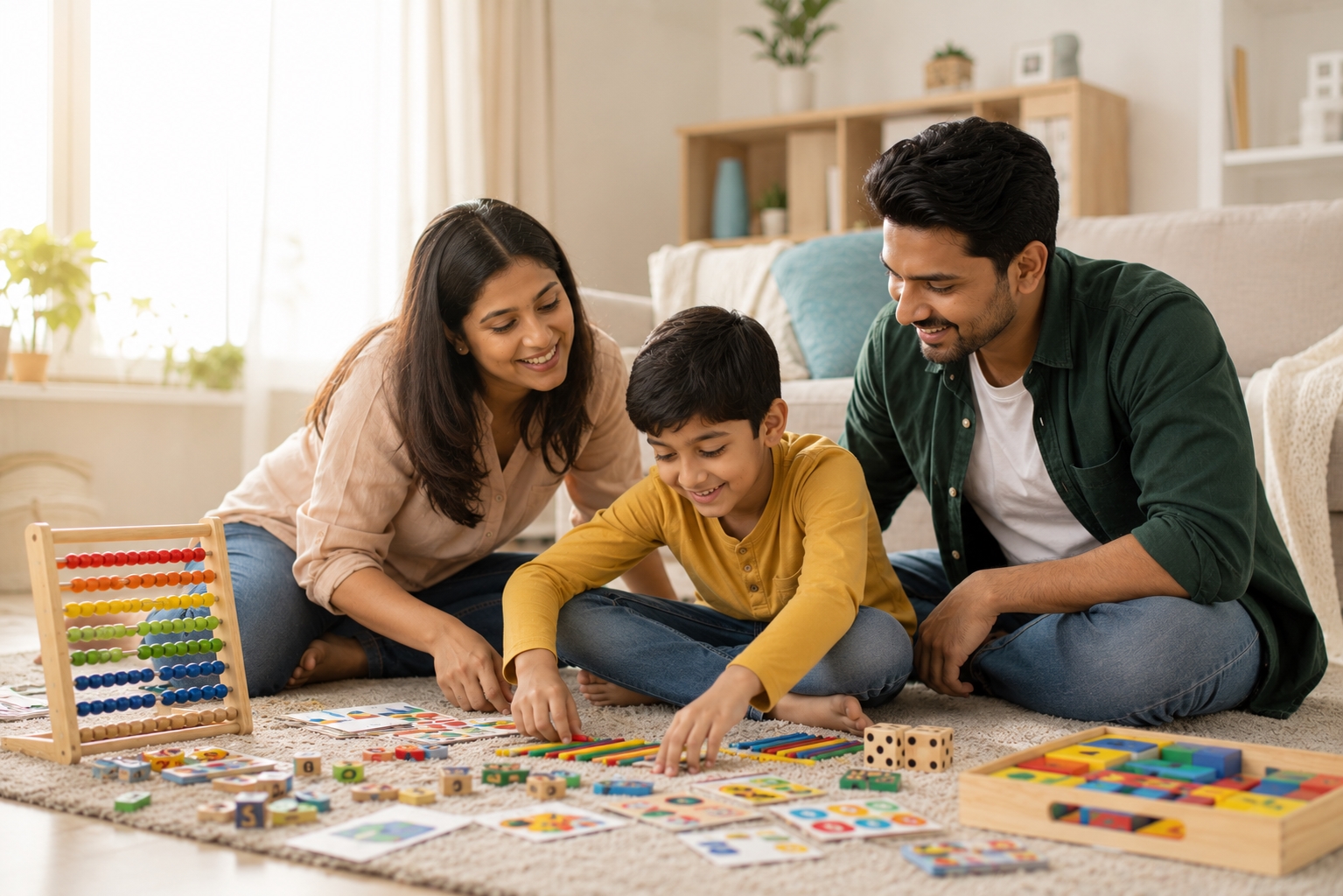
Mental math activities help children solve calculations quickly without using paper or calculators. Simple games like counting objects, dice challenges, shopping math, card games, cooking, and estimation activities improve number sense, logical thinking, memory, and confidence. Spending just 10–15 minutes a day on fun, play-based math activities can build strong lifelong math skills.
15 Fun Mental Math Activities for Kids
Have you ever noticed how some children solve simple math problems almost instantly while others still count on their fingers?
The difference isn't talent—it's practice.
Mental math is one of the most valuable skills children can develop during their early learning years. It helps them calculate faster, recognize number patterns, think logically, and approach mathematics with confidence. The good news is that building these skills doesn't require expensive classes or hours of worksheets.
In fact, some of the best mental math lessons happen while climbing stairs, shopping for groceries, cooking dinner, or playing family games.
Here are 15 fun mental math activities that parents can easily try at home to make math enjoyable, meaningful, and stress-free.
Why Mental Math Activities Matter
Mental math is the ability to solve mathematical problems using your mind instead of relying on paper, calculators, or digital devices.
Children who regularly practice mental math develop:
- Better number sense
- Faster calculation skills
- Improved memory
- Logical thinking abilities
- Stronger concentration
- Greater confidence in mathematics
- Better performance in school
Most importantly, they begin seeing math as something useful rather than something to fear.
1. Number of the Day
Choose one number each day, such as 20.
Ask your child to find different ways to make that number.
Examples:
- 10 + 10
- 25 – 5
- 4 × 5
- 40 ÷ 2
Best Age: 6–10 years
Skills Developed:
- Number flexibility
- Addition
- Subtraction
- Multiplication
- Division
2. Staircase Counting
Turn climbing stairs into a counting game.
Young children can count each step, while older children can skip count by 2s, 5s, or 10s.
Example:
2, 4, 6, 8…
or
5, 10, 15, 20…
Best Age: 3–7 years
Skills Developed:
- Counting
- Skip counting
- Multiplication readiness
3. Guess the Total
Fill a bowl with buttons, blocks, marbles, or coins.
Ask:
"How many do you think are inside?"
After estimating, count them together.
This teaches children that estimating is an important math skill—not just getting the exact answer.
Best Age: 4–8 years
4. Dice Challenge
Roll two dice.
Ask children to:
- Add the numbers
- Subtract them
- Multiply them
- Double the larger number
Changing the rules keeps the game exciting.
Best Age: 5–9 years
5. Missing Number Game
Say simple equations aloud.
Examples:
□ + 8 = 15
18 − □ = 10
□ × 4 = 20
Let children solve the missing number mentally.
Best Age: 6–10 years
6. Shopping Math
The grocery store is a fantastic classroom.
Ask questions like:
- If apples cost $6 and bananas cost $4, how much do they cost together?
- We have $20. After buying milk for $8, how much money is left?
These real-life situations make math meaningful.
Best Age: 7–12 years
7. Kitchen Math
Cooking naturally introduces children to:
- Fractions
- Measuring
- Doubling recipes
- Halving ingredients
Ask questions like:
"If the recipe needs one cup of flour, how much do we need for double the recipe?"
Children learn math while making something delicious.
Best Age: 6–12 years

8. Counting During Car Rides
Long drives become learning opportunities.
Try asking:
- Count red cars.
- Count backward from 100.
- Skip count by 5s.
- What comes after 79?
These quick games strengthen mental calculations without feeling like homework.
Best Age: 4–10 years
9. Number Treasure Hunt
Hide number cards around the house.
When children find them, ask them to:
- Arrange numbers in order.
- Find even numbers.
- Find odd numbers.
- Create addition problems.
Movement and learning together improve memory.
Best Age: 4–8 years
10. Math Bingo
Create a simple bingo board with numbers.
Instead of calling numbers, ask math questions.
Example:
"What is 6 × 4?"
Children cover the correct answer.
Math bingo builds multiplication and quick recall skills.
Best Age: 6–11 years
11. Card Number Race
Using a deck of playing cards, players draw two cards and mentally add, subtract, or multiply the values.
Whoever answers first keeps the cards.
Simple card games improve calculation speed while keeping children engaged.
Best Age: 6–12 years
12. Sudoku for Kids
Sudoku develops much more than arithmetic.
Children learn to:
- Think logically
- Recognize patterns
- Solve problems independently
- Improve concentration
Start with beginner Sudoku puzzles before progressing to larger grids.
Best Age: 8–12 years
13. Roll and Add
Roll three dice.
Challenge children to:
- Find the largest possible total.
- Find the smallest total.
- Create equations using all three numbers.
This encourages flexible mathematical thinking.
Best Age: 6–10 years
14. Pizza Fraction Fun
During pizza night, ask questions like:
"If we cut the pizza into eight slices and you eat two, what fraction did you eat?"
Real food makes abstract concepts much easier to understand.
Best Age: 6–10 years
15. Build the Biggest Number
Write digits on small cards.
Example:
2, 4, 7, 9
Ask your child to arrange them into:
- The biggest number
- The smallest number
- An even number
- An odd number
This activity strengthens place value and number sense.
Best Age: 6–9 years
Why Mental Math Activities Work Better Than Worksheets
Worksheets certainly have their place, but children learn best when they actively participate.
Play-based mental math activities:
- Reduce math anxiety
- Increase confidence
- Improve long-term memory
- Encourage logical thinking
- Show how math applies to everyday life
Instead of memorizing answers, children begin understanding how numbers work.
Common Mistakes Parents Should Avoid
While teaching mental math, avoid these common mistakes:
- Turning every activity into a test
- Focusing only on speed instead of understanding
- Correcting every small mistake immediately
- Comparing children with siblings or classmates
- Using long practice sessions that cause frustration
Instead, celebrate effort, encourage different problem-solving methods, and keep activities fun and relaxed.

A Simple 10-Minute Daily Mental Math Routine
You don't need an hour every day.
Try this quick routine:
- 2 minutes: Count objects or skip count.
- 2 minutes: Play a dice game.
- 2 minutes: Practice estimation.
- 2 minutes: Solve a few mental math questions.
- 2 minutes: Play a quick number puzzle or card game.
Consistency matters much more than long study sessions.
How ClassMonitor Makes Mental Math Fun
At ClassMonitor, we believe children learn mathematics best through play, exploration, and hands-on experiences.
Our educational kits combine math games, flashcards, puzzles, activity cards, and interactive learning resources that help children develop strong number sense while enjoying every moment of learning.
Instead of memorizing formulas, children discover mathematical concepts through engaging activities that improve logical thinking, confidence, creativity, and problem-solving skills. This play-based approach helps young learners build a solid foundation for future academic success while making math enjoyable at home.
Frequently Asked Questions
1. What are mental math activities?
Mental math activities are fun games and exercises that help children solve math problems in their heads without using calculators or paper.
2. At what age should children start mental math?
Children can begin simple mental math activities as early as 3–4 years old through counting games, matching activities, and number recognition.
3. How often should children practice mental math?
Ten to fifteen minutes of daily practice is usually enough to improve number sense and calculation skills.
4. Are mental math games better than worksheets?
Games encourage active participation, reduce math anxiety, and make learning enjoyable. Combining games with occasional worksheets provides the best results.
5. Can everyday activities improve mental math?
Yes. Shopping, cooking, traveling, board games, and household chores all provide excellent opportunities to practice mental math naturally.
Conclusion
Mental math isn't about making children solve difficult calculations quickly—it's about helping them understand numbers with confidence. Everyday activities like counting stairs, cooking meals, playing cards, shopping, and solving simple number puzzles create meaningful learning experiences that worksheets alone cannot provide. By spending just a few playful minutes each day, parents can nurture strong number sense, logical thinking, and lifelong confidence in mathematics. With ClassMonitor's hands-on, play-based learning approach, children discover that math is not only easier to understand but also exciting to explore, laying the foundation for success both inside and outside the classroom.