
10 Confidence-Building Activities for Shy or Quiet Kids
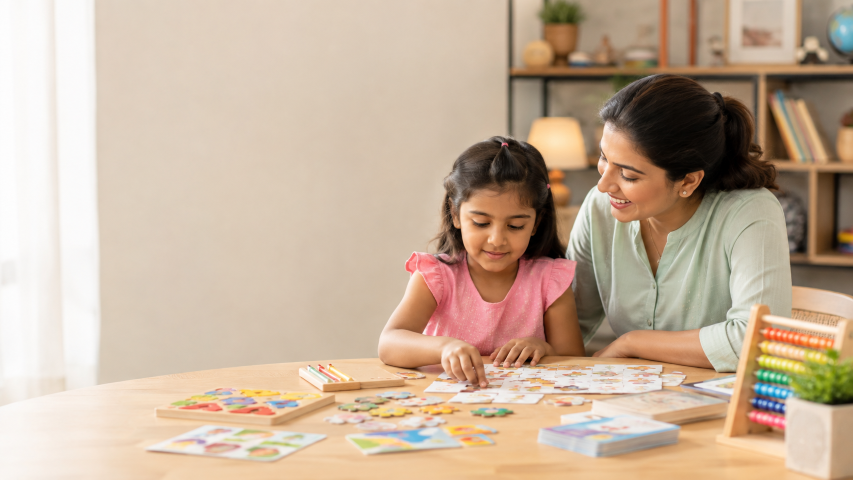
10 Confidence-Building Activities for Shy or Quiet Kids
A quiet child is not a child without confidence.
Some children simply need more time to feel comfortable in new situations. They may prefer to observe before joining a group, speak more freely at home than at school, or feel nervous when meeting unfamiliar people.
Confidence does not mean becoming the loudest child in the room. It means feeling secure enough to try, communicate, make choices, handle mistakes, and participate when it matters.
For parents, the best approach is not to force a shy child into uncomfortable situations. Instead, give them small and regular opportunities to experience success.
Simple activities such as storytelling, role play, creative play, games, and household responsibilities can become everyday confidence-building opportunities. The important thing is to keep them enjoyable, predictable, and appropriate for your child's comfort level.
This guide shares 10 confidence-building activities for shy or quiet kids that parents can easily try at home.
Key Takeaways
Confidence develops through small, repeated experiences.
Quietness does not automatically mean a child lacks confidence.
Role play can help children practise unfamiliar social situations safely.
Storytelling and creative activities encourage self-expression.
Games can develop communication, decision-making, and teamwork.
Small responsibilities help children feel capable and trusted.
Parents should praise effort and persistence instead of demanding perfection.
Children should be encouraged without being forced to participate.
What Is the Best Way to Build Confidence in a Shy Child?
The best way to build confidence is to give children manageable opportunities to try something, experience success, and try again.
Instead of saying:
"Don't be shy."
try:
"Would you like to try it with me?"
Instead of expecting a child to speak in front of a large group, start with a conversation between parent and child.
Instead of immediately joining a busy group, let your child watch first.
These small steps can help children become familiar with new situations and gradually feel more comfortable participating.
The source material also emphasizes that confidence grows through gentle, repeatable experiences where children can predict what will happen and build momentum over time.
10 Confidence-Building Activities for Shy or Quiet Kids
1. Role Play and Pretend Play
Role play gives children a safe way to practise situations that might otherwise feel uncomfortable.
A child who is nervous about meeting a new friend can pretend to be a character meeting someone for the first time.
You could play:
Teacher and student
Doctor and patient
Shopkeeper and customer
Parent and child
New friends meeting
Superhero and helper
For example, pretend that your child wants to join a game.
Ask:
"What could you say?"
Help them practise:
"Can I play with you?"
You can then switch roles and allow your child to become the parent, teacher, or friend.
Why it works
Role play allows children to rehearse words, emotions, and responses without feeling that they are being judged.
For children who are particularly hesitant, begin with puppets, dolls, stuffed animals, or toys. They may find it easier to make a teddy speak before they feel ready to speak themselves.
2. Storytelling With Picture Cards
Storytelling is a simple way to encourage children to express ideas without making communication feel like a lesson.
Give your child a few pictures and ask them to create a story.
For younger children, start with questions:
Who is in the picture?
What are they doing?
What happened first?
What happens next?
How do you think they feel?
Once your child becomes comfortable, let them create the story independently.
Make storytelling confidence-friendly
Don't immediately ask your child to tell the story to a large group.
Try this progression:
Parent → Sibling → Grandparent → Small group → Larger group
The child gets repeated opportunities to speak while the level of challenge increases gradually.
Storytelling can also become a natural bridge to public speaking because children learn to organise thoughts, use words to describe ideas, and speak in sequence.
3. Show and Tell at Home
Show and tell doesn't need a classroom.
Choose a favourite toy, book, drawing, or object and ask your child to talk about it.
Start with just three questions:
What is it?
Why do you like it?
What can you do with it?
A young child might say:
"This is my dinosaur. I like it because it is big."
That's enough.
Don't focus on grammar or presentation skills at first. Focus on helping your child feel comfortable sharing an idea.
Gradually increase the challenge
Once your child is comfortable talking to you, try:
Sharing with a sibling
Sharing with grandparents
Sharing during family time
Sharing with one familiar friend
Giving a short presentation
This turns a simple home activity into a gentle introduction to public speaking.
4. Art and Craft With a Mini "Show and Tell"
Creative activities can give quiet children another way to express themselves.
Give your child crayons, paper, clay, craft materials, or an activity kit and allow them to create something independently.
When they finish, instead of asking:
"What is it?"
try:
"Tell me about it."
This gives the child control over the conversation.
You can follow up with:
What is your favourite part?
Why did you choose these colours?
What should we call it?
What would you add next?
How did you make it?
There is no single correct answer in creative work. That can make it easier for children who are afraid of making mistakes.
Confidence tip
Start with an audience of one.
Over time:
Parent → Parent + sibling → Grandparent → Small group
The aim is not performance. It is comfortable self-expression.
5. Give Your Child a "Helper" Job
Confidence isn't built only through speaking.
Children also gain confidence when they discover:
"I can do things by myself."
Give your child a simple responsibility at home.
Examples include:
Watering plants
Putting books away
Matching socks
Organising crayons
Setting napkins on the table
Helping pack their activity materials
Sorting toys
Choose a job that has a clear beginning and end.
Instead of saying:
"Good job!"
give specific feedback:
"You remembered to put all your books back without me reminding you."
This shows your child exactly what they accomplished.
The source material similarly highlights achievable, consistent, and specific household responsibilities as opportunities to develop capability and independence.

6. Play a Confidence Scavenger Hunt
Turn an ordinary walk or play session into an adventure.
Create a simple list:
Find something...
Red
Round
Soft
Smooth
Small
That makes a sound
Let your child decide what counts.
Then give them opportunities to lead.
Ask:
"Where should we look next?"
or:
"What should we find first?"
Now the child is not simply following instructions. They are making decisions.
Make it social
If your child is comfortable, invite a sibling or familiar friend to join.
They can practise:
Asking questions
Giving suggestions
Taking turns
Making decisions
Sharing discoveries
The activity provides a natural reason to communicate, which can feel easier than simply asking a shy child to "talk more."
7. Play Board Games and Cooperative Games
Games offer something that can be particularly helpful for shy children:
structure.
Everyone knows the rules. Everyone gets a turn. Everyone knows what happens next.
Start with simple:
Matching games
Memory games
Sorting games
Puzzles
Building games
Cooperative board games
Cooperative games can be especially useful because children work toward a shared goal instead of focusing entirely on winning.
For example:
"Let's see if we can complete this puzzle together."
During games, children naturally practise:
Turn-taking
Listening
Communication
Decision-making
Problem-solving
Handling mistakes
Play-based experiences can provide opportunities for children to develop social, emotional, cognitive, and problem-solving skills.
8. Try Music, Movement and Freeze Games
Confidence isn't always about speaking.
For some children, physical confidence can be an important first step.
Try:
Freeze dance
Copy-the-leader
Animal walks
Action songs
Simple yoga
Clap-and-copy games
Follow-the-rhythm games
Begin by leading the activity.
Then give your child a turn:
"Now you choose the next move."
Allowing children to become the leader for even a few minutes can help them practise making decisions and taking initiative.
Keep it pressure-free
Don't make the child perform a dance in front of everyone.
The objective is simply:
Try → Enjoy → Lead → Repeat
As the child becomes comfortable, they may naturally become more willing to participate in front of others.
9. Practise Friendship Conversations
Sometimes shy children want to join a group but don't know what to say.
Practise a few simple sentences at home.
Joining a game
"Can I play too?"
Asking for help
"Can you help me?"
Starting a conversation
"What are you playing?"
Taking turns
"Can we take turns?"
Responding to "not right now"
"Okay, maybe later."
Turn the practice into a game.
Use toys as conversation partners.
For example:
Parent: "I'm building a tower. What could you say?"
Child: "Can I play with you?"
Then swap roles.
Let your child become the teacher and teach you what to say.
This makes social practice playful rather than intimidating.
10. Start a Mini Public Speaking Activity
Public speaking doesn't have to begin on a stage.
For young children, it can start with 30 seconds of talking at home.
Choose a familiar topic:
My favourite toy
My favourite animal
My favourite food
My favourite book
What I did today
My favourite game
Something I learned
Let your child speak for 30 seconds.
Don't interrupt to correct every mistake.
Build a confidence ladder
Step 1: Speak to a parent
Step 2: Speak to a sibling
Step 3: Speak to a grandparent
Step 4: Speak to two or three familiar people
Step 5: Speak in a small group
Step 6: Speak before a larger group when ready
The goal is not to rush through the steps.
The goal is to give your child enough positive experiences to think:
"I can speak. I can try. I can handle this."
How Can Parents Encourage a Shy Child Without Pressure?
Parents play an important role in creating an environment where children feel safe enough to try.
Instead of saying:
"Why are you so shy?"
Say:
"You can take your time."
Instead of:
"Go and talk to them."
Try:
"Would you like me to come with you?"
Instead of:
"Don't be scared."
Try:
"It might feel new at first. We can take it one step at a time."
Instead of praising only results:
"You were brave to try that even though you felt nervous."
Specific encouragement helps children recognise their own progress.
The source material recommends gentle encouragement, predictable routines, opportunities to observe before joining, and praise for effort rather than perfection.
5 Things Parents Should Avoid When Building Confidence
Repeatedly calling a child shy can make them feel that shyness is part of their identity.
1. Don't label your child as "shy"
Instead, describe the situation:
"You like to take some time to warm up."
2. Don't compare them with other children
Avoid:
"Look how confidently she is speaking."
Every child develops at a different pace.
3. Don't force performances
A child may need several attempts before feeling ready.
4. Don't praise only perfection
Confidence grows when children learn that mistakes are manageable.
5. Don't expect instant results
A child may participate one day and hesitate the next.
That doesn't mean progress has disappeared.
How Do You Know Your Child Is Becoming More Confident?
Look for small changes rather than dramatic transformations.
Your child may:
Say hello without prompting
Ask for help
Choose an activity independently
Share an idea
Join a game
Answer a question
Take a turn
Lead a game
Talk about their feelings
Try again after making a mistake
These small moments matter.
Confidence often develops gradually through repeated experiences rather than one major breakthrough.
How ClassMonitor Can Support Confidence Through Play
At ClassMonitor, learning is designed to be engaging, hands-on, and child-friendly.
For shy or quiet children, learning activities can become opportunities to practise confidence without making the child feel as though they are being tested.
Parents can use activity-based resources for:
Storytelling
Picture description
Puzzles
Matching and sorting
Creative activities
Question-and-answer games
Hands-on problem-solving
Parent-child conversations
Turn-taking activities
For example, a parent can pick a story card and ask:
"What do you think happens next?"
The child gets to think, answer, and explain.
With repeated practice, a simple learning activity can become an opportunity for:
Thinking → Speaking → Sharing → Participating → Building Confidence
This is one reason play-based learning can be valuable for young children: the learning experience gives them something meaningful to talk about and explore.

When Should Parents Seek Extra Support?
Shyness is not automatically a problem.
Some children are naturally quiet, cautious, or slow to warm up.
However, if a child's fear or withdrawal consistently prevents them from communicating, participating in everyday activities, making relationships, or functioning comfortably at school, it may be worth discussing your concerns with a pediatrician or qualified child-development professional.
The goal is not to change a child's personality.
It is to understand what support they may need.
Frequently Asked Questions
1. What are the best confidence-building activities for shy kids?
Role play, storytelling, art, cooperative games, movement activities, simple responsibilities, and show-and-tell can help children build confidence gradually.
2. How can I build confidence in a shy child?
Give your child small challenges, encourage participation without pressure, praise effort, and provide regular opportunities to practise communication and independence.
3. What activities improve social skills in children?
Role play, cooperative games, storytelling, pretend play, and small-group activities help children practise communication, turn-taking, sharing, listening, and asking for help.
4. How can I encourage my child to speak confidently?
Start with familiar topics and small audiences. Let your child practise speaking at home before gradually introducing conversations with friends, teachers, or groups.
5. Should parents force shy children to participate?
Avoid forcing participation. Let children observe first, offer manageable steps, and encourage them gently when they feel comfortable trying.
6. Can storytelling help shy children become confident?
Yes. Storytelling allows children to practise expressing ideas, emotions, and opinions in a playful environment without feeling pressured to perform.
7. How can parents support quiet children at home?
Create predictable routines, listen patiently, encourage small challenges, celebrate effort, and provide regular opportunities for children to express themselves.
8. How can ClassMonitor activities help shy children?
ClassMonitor's hands-on learning activities encourage children to explore, solve problems, communicate, and participate through structured, playful experiences at their own pace.
Final Thoughts: Let Confidence Grow at Its Own Pace
A quiet child doesn't need to become the loudest person in the room.
They need opportunities to discover:
"I can try."
"I can speak."
"I can make a choice."
"I can make mistakes and try again."
Start with one simple activity. Play together. Let your child lead when they are ready. Celebrate effort instead of perfection.
Over time, these small experiences can create something much bigger: a child who trusts their own voice.
And sometimes, confidence begins with something as simple as:
"Let me try."