
Are We Making Childhood Too Academic?
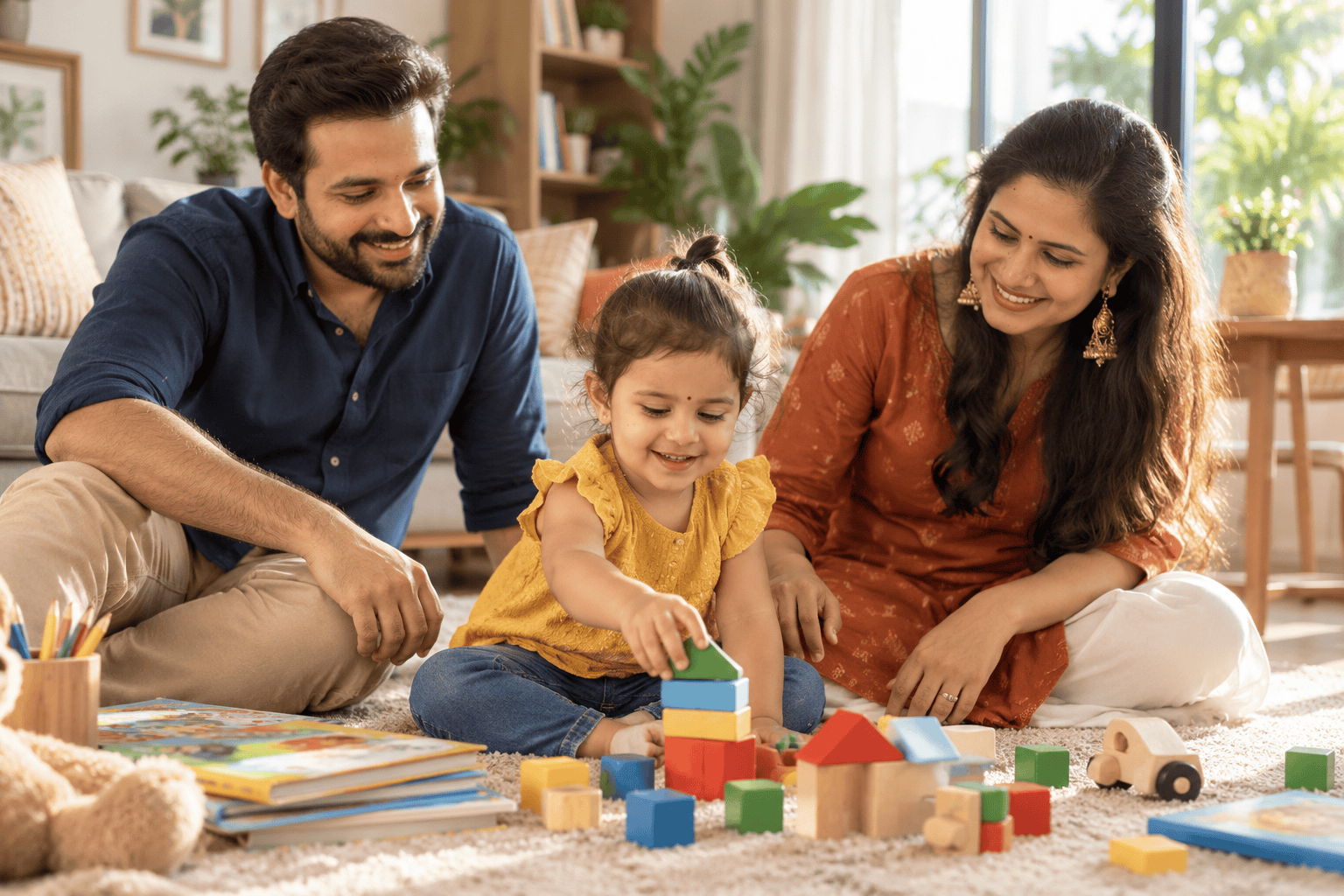
Are children getting enough time to play, explore, create, and simply be children? Learn how academic pressure, packed schedules, and early learning expectations can affect childhood—and why a balanced approach to play-based learning and child development matters.
A child comes home from school, finishes homework, attends a class, completes a worksheet, and then moves on to another activity. Somewhere between all these plans, there may be very little time left for simply playing.
For many parents, this schedule comes from a good place. We want our children to learn, stay ahead, develop useful skills, and be prepared for the future. Early learning can certainly be valuable. But it is worth asking a bigger question: Are we making childhood too academic?
The goal should not be to remove learning from childhood. Instead, it is about understanding that children learn in many ways. Play, conversation, movement, exploration, creativity, and everyday experiences can all contribute to learning alongside more structured academic activities.
Why Is Balanced Learning Important?
Children need opportunities to develop more than academic knowledge. They are also building language, problem-solving, social, emotional, physical, and creative skills.
The American Academy of Pediatrics describes play as important for children's cognitive, physical, social, and emotional development. Its guidance also highlights the importance of balancing academic enrichment with child-directed play and free time.
This does not mean academic learning is unnecessary. Structured learning can help children develop important foundational skills. The question is whether structured learning leaves enough room for other experiences that childhood naturally provides.
A child building a tower is experimenting with balance. A child pretending to run a shop is practising communication and early mathematics. A child drawing a strange-looking creature is using imagination. A child playing a game with a sibling is learning to negotiate, wait, and solve problems.

Not every learning experience needs to look like a lesson.
Are We Expecting Children to Learn Too Much Too Early?
When Early Learning Becomes a Checklist
It is easy to turn childhood milestones into a checklist: read by a certain age, write neatly, count to a certain number, learn another language, attend enrichment classes, complete worksheets, and master the next skill.

Having developmental goals is not necessarily a problem. The concern begins when every moment becomes an opportunity to measure performance.
Children develop at different rates. A five-year-old who is still working on a particular skill may simply need more time and practice. Constant comparison can make learning feel like something children have to perform rather than something they get to explore.
When Every Activity Has to Have an Outcome
Imagine a child painting a picture. Instead of simply enjoying the activity, an adult may immediately ask, “What did you learn from this?”
Sometimes there is value in asking questions. But children also need experiences that are enjoyable without needing a measurable outcome.
Play can support learning precisely because children have room to experiment, make mistakes, repeat actions, and follow their curiosity. The AAP notes that developmentally appropriate play supports language, social-emotional development, self-regulation, and executive function.
What Does Play-Based Learning Actually Mean?
Learning Through Everyday Play
Play-based learning does not mean children are learning nothing. It means learning can happen through activities that are meaningful, active, and engaging.
A child sorting toys by colour is exploring classification. Building with blocks can involve spatial reasoning. Making up a story can strengthen vocabulary and communication. Playing a simple counting game can introduce early mathematical thinking.

The learning is still there—it simply does not always look like traditional schoolwork.
Guided Play Can Have Structure Too
Play and structured learning do not have to be opposites.
A parent might provide blocks and suggest, “Can you build a bridge that can hold this toy?” The child still has freedom to experiment, but there is also a learning challenge.
This kind of approach can create space for curiosity, problem-solving, creativity, and independent thinking while keeping the experience enjoyable.
How Can Parents Balance Academics and Childhood?
Protect Unstructured Time
Not every part of a child's day needs to be scheduled.
Allowing some unstructured time gives children opportunities to decide what they want to do, invent games, explore their surroundings, or simply rest. The AAP has specifically highlighted the developmental value of child-directed play and the need to protect play alongside academic enrichment.
Turn Everyday Moments Into Learning
Learning does not have to stop when the worksheet is finished.
Cooking together can involve counting and measurement. Grocery shopping can introduce numbers and comparison. A walk can lead to conversations about plants, animals, weather, and the environment. Reading a bedtime story can build vocabulary and comprehension.

These experiences make learning at home feel connected to real life rather than separated from it.
Follow the Child's Curiosity
Instead of always deciding what a child should learn next, pay attention to what they are naturally interested in.
If a child becomes fascinated by insects, for example, that interest can lead to books, drawings, counting activities, observation, storytelling, and outdoor exploration.
Curiosity can become the starting point for learning.
Choose Activities That Build Multiple Skills
Parents do not necessarily need a separate activity for every developmental area.
A well-designed learning experience can combine linguistic skills, logical thinking, sensory and motor skills, cognitive skills, and creativity. These are also areas highlighted across ClassMonitor's learning approach.
ClassMonitor's Annual Learning Kits, for example, integrate literacy and numeracy with art and craft, role-play, puppetry, music and movement, logical thinking, problem-solving, and values such as empathy and sharing.
The idea is not to make every play activity academic. It is to create opportunities where learning can naturally emerge from meaningful experiences.
How Does Play-Based Learning Benefit Children?
A balanced childhood can give children opportunities to develop skills that extend beyond academic performance.
Cognitive development: Children can practise reasoning, memory, decision-making, and problem-solving while exploring and experimenting.
Language development: Conversations, storytelling, pretend play, and reading together can expand vocabulary and communication.
Social-emotional development: Play can provide opportunities to cooperate, negotiate, express feelings, and understand other perspectives.
Creativity: Open-ended activities allow children to imagine possibilities instead of always searching for one correct answer.
Independence: When children have opportunities to choose activities and figure things out themselves, they can gradually become more comfortable making decisions.
Research and pediatric guidance consistently recognise play as an important part of healthy development rather than simply a break from learning.
What Can Parents Do Differently?
Replace “Is My Child Ahead?” With “Is My Child Engaged?”
Instead of constantly asking whether a child is ahead of peers, parents can also observe whether the child is curious, willing to try, comfortable making mistakes, and interested in discovering new things.
Progress still matters. But childhood development is broader than academic milestones.
Don't Turn Every Interest Into a Lesson
If your child loves dinosaurs, you do not need to create a dinosaur worksheet every time they mention one.
Sometimes you can simply listen to their theories, answer their questions, read a book together, or let them create their own dinosaur world.
The conversation itself can be the learning experience.
Leave Room for Boredom
A child saying “I'm bored” does not always mean they need another scheduled activity.
Sometimes boredom creates the space for children to invent something, revisit an old toy, draw, build, imagine, or discover an interest independently.
Focus on Progress, Not Constant Performance
Children need encouragement to keep trying. Instead of focusing only on whether an answer is correct, parents can ask:
“What did you try?”
“What could you change?”
“Why do you think that happened?”
“What would you like to try next?”
These questions shift the focus from performance to thinking and learning.
The Goal Isn't Less Learning. It's Better Balance.
The answer to “Are we making childhood too academic?” is not that academics are bad or that structured learning should disappear.
Children need foundational academic skills. They also need play, movement, relationships, creativity, exploration, and time to develop at their own pace.
The real opportunity is to stop treating these as competing categories.
A child can learn numbers while playing a game. They can build language while telling a story. They can develop problem-solving skills while building a tower. They can develop confidence while trying something that doesn't work the first time.
At ClassMonitor, this broader view of learning is reflected in an approach that combines curated activities and real-life learning experiences with areas such as linguistic skills, logical thinking, sensory and motor development, cognitive skills, and creativity.

Perhaps the goal isn't to make childhood more academic.
Perhaps the goal is to make learning feel more like childhood.
Frequently Asked Questions
Is academic learning important in early childhood?
Yes. Foundational literacy, numeracy, language, and other age-appropriate skills are important. However, children also benefit from play, movement, social interaction, creativity, and exploration. A balanced approach can make room for all of these.
Is play actually a form of learning?
Yes. Play can support cognitive, language, social-emotional, physical, and self-regulation skills. The American Academy of Pediatrics recommends protecting developmentally appropriate play alongside other learning experiences.
How much structured learning does a young child need?
There is no single schedule that works for every child. Age, temperament, developmental stage, interests, school schedule, and individual needs all matter. The important consideration is whether structured activities leave sufficient time for rest, relationships, movement, and child-directed play.
Can educational activities still be fun?
Absolutely. Educational activities can include games, stories, experiments, crafts, movement, puzzles, and hands-on exploration. The key is that learning does not always need to feel like formal schoolwork.
How can parents reduce academic pressure?
Parents can focus on steady progress rather than constant comparison, allow unstructured play, follow children's interests, keep practice age-appropriate, and celebrate effort and curiosity alongside outcomes.
Recommended ClassMonitor Reads
- How to Make Learning Math Fun for Kids – Ideas for making everyday mathematics more engaging and less worksheet-driven.
- 15 Fun Mental Math Activities for Kids That Make Learning Easy at Home – Practical ways to bring mathematical thinking into home activities.
- What If Being “Ahead” Isn't the Goal? – A closer look at curiosity, confidence, and learning beyond comparison.
- How to Keep Kids Busy at Home – Ideas for meaningful activities that encourage learning, creativity, and independent play.


