
25 Mental Math Questions with Answers for Kids | Fun Brain Boosters
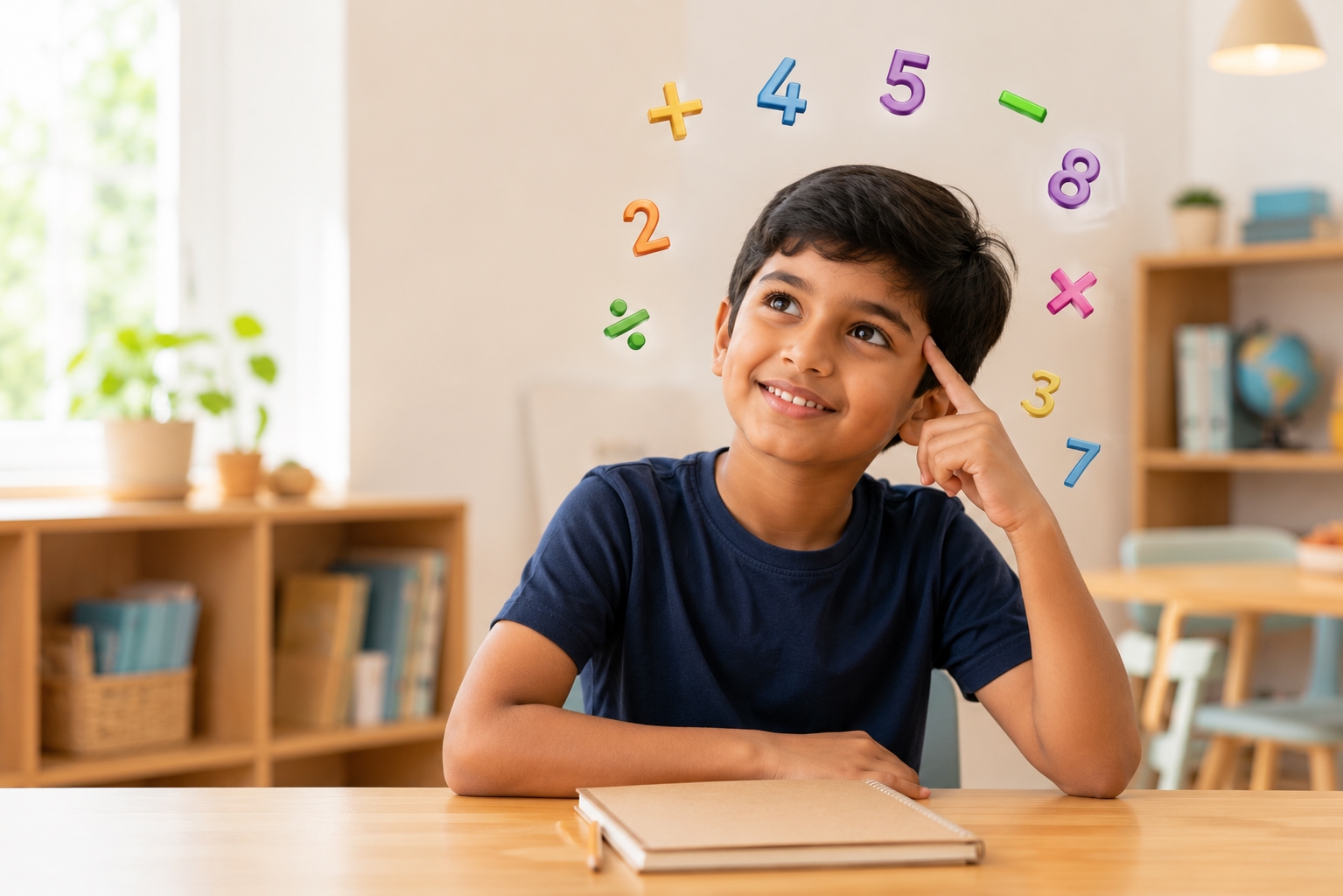
25 Mental Math Questions with Answers for Kids: Fun Brain-Boosting Challenges for Everyday Learning
Mental math questions help children solve calculations quickly without using paper or calculators. Regular practice improves number sense, concentration, logical thinking, confidence, and problem-solving skills. These 25 mental math questions with answers are designed for kids aged 5–12 and range from easy to challenging, making learning math fun and engaging at home or in the classroom.
25 Mental Math Questions with Answers for Kids
Math becomes exciting when children see it as a game instead of a subject.
Instead of memorizing formulas or relying on calculators, mental math encourages children to think creatively, recognize number patterns, and solve problems quickly using their minds. These skills not only improve classroom performance but also help children in everyday situations like shopping, cooking, telling time, and estimating totals.
Whether you're a parent looking for a fun learning activity or a teacher planning a classroom warm-up, these 25 mental math questions with answers are perfect for building confidence and making math enjoyable.
What Are Mental Math Questions?
Mental math questions are calculation challenges that children solve without writing down steps or using calculators. They encourage kids to use number patterns, estimation, and logical thinking to find answers quickly.
Regular mental math practice helps children become more confident, accurate, and flexible with numbers while strengthening their overall mathematical understanding.
Why Should Kids Practice Mental Math?
Practicing mental math every day offers several benefits:
- Improves calculation speed
- Strengthens number sense
- Builds confidence in mathematics
- Enhances concentration and memory
- Develops logical thinking
- Encourages problem-solving skills
- Reduces fear of math
- Makes everyday calculations easier
Tip: Just 10–15 minutes of mental math practice daily can significantly improve a child's confidence and fluency with numbers.
Age Guide
| Age | Recommended Difficulty |
| 5–6 Years | Easy |
| 6–8 Years | Easy to Medium |
| 8–10 Years | Medium |
| 10–12 Years | Medium to Challenging |

25 Mental Math Questions with Answers
Easy Mental Math Questions (Ages 5–7)
1. What is 8 + 7?
Answer: 15
Mental Math Tip: Think 8 + 2 = 10, then add the remaining 5.
2. What is 20 − 9?
Answer: 11
Mental Math Tip: Subtract 10, then add 1 back.
3. What is 5 × 6?
Answer: 30
4. What is half of 18?
Answer: 9
5. Which number comes next?
15, 20, 25, 30, ___
Answer: 35
6. If you have 3 bags with 4 apples each, how many apples do you have?
Answer: 12
7. What is 50 + 25?
Answer: 75
8. Which is greater: 48 or 84?
Answer: 84
Medium Mental Math Questions (Ages 7–9)
9. What is 99 + 26?
Answer: 125
Mental Math Tip: Think 100 + 26 = 126, then subtract 1.
10. What is 45 − 18?
Answer: 27
11. What is 25 × 4?
Answer: 100
Mental Math Tip: Four groups of 25 make 100.
12. What is 72 ÷ 8?
Answer: 9
13. Fill in the missing number:
36, 42, 48, ___, 60
Answer: 54
14. A toy costs $15. You buy 3 toys. How much do you spend?
Answer: $45
15. What is 250 − 100?
Answer: 150
16. Which number is closest to 500?
489, 512, 498
Answer: 498
Challenging Mental Math Questions (Ages 9–12)
17. What is 125 + 275?
Answer: 400
18. What is 48 × 5?
Answer: 240
Mental Math Tip: Multiply by 10, then divide by 2.
19. What is 360 ÷ 9?
Answer: 40
20. A clock shows 2:30 PM. What time will it be after 2 hours and 45 minutes?
Answer: 5:15 PM
21. Which number is missing?
8, 16, 32, __, 128
Answer: 64
22. If one notebook costs $18, how much do 5 notebooks cost?
Answer: $90
23. What is 15% of 100?
Answer: 15
24. A family has 24 cookies. They share them equally among 6 people. How many cookies does each person get?
Answer: 4
25. What is the total?
250 + 150 − 75 + 25
Answer: 350
Mental Math Tip: Group friendly numbers first.
Mental Math Tips for Kids
Children can solve mental math questions faster by using simple strategies:
Think in Tens
Instead of adding 29 + 18,
Think:
30 + 18 = 48
Subtract 1
Answer = 47
Break Numbers Apart
Example:
46 + 27
40 + 20 = 60
6 + 7 = 13
60 + 13 = 73
Double and Half
16 × 25
8 × 50
4 × 100
Answer = 400
Estimate Before Solving
Estimate first to quickly check whether your answer makes sense.
Practice Every Day
Daily practice is far more effective than solving many questions once a week.

Fun Ways to Practice Mental Math at Home
Mental math becomes easier when children use it in everyday life.
Try these simple activities:
- Add grocery prices while shopping.
- Count stairs in twos, fives, or tens.
- Estimate restaurant bills.
- Calculate cricket or football scores.
- Roll dice and add numbers mentally.
- Count coins in a piggy bank.
- Solve one math question during dinner.
- Play number pattern games.
- Practice multiplication tables during car rides.
- Use flashcards for quick quizzes.
These activities make learning feel like play instead of homework.
How ClassMonitor Makes Mental Math Fun
At ClassMonitor, we believe children learn math best through play-based, hands-on experiences. Our thoughtfully designed learning kits, interactive games, puzzles, flashcards, worksheets, and engaging activities help children build strong number sense before moving to faster mental calculations. By combining fun with structured learning, we encourage confidence, logical thinking, and problem-solving skills that children can use both in school and everyday life.

Frequently Asked Questions
1. What are mental math questions?
Mental math questions are calculation problems that children solve using their minds instead of paper, calculators, or written methods.
2. At what age should children start practicing mental math?
Children can begin simple mental math activities around 5–6 years of age, once they understand basic counting and simple addition.
3. How many mental math questions should kids practice daily?
Practicing 10–15 questions or spending 10–15 minutes each day is usually enough to improve speed, confidence, and number sense.
4. Do mental math questions improve brain development?
Yes. Regular mental math practice strengthens memory, concentration, logical reasoning, and problem-solving abilities.
5. Are mental math questions useful for school exams?
Absolutely. Mental math helps children solve calculations faster, saves time during exams, and reduces simple arithmetic mistakes.
6. Can parents teach mental math at home?
Yes. Parents can use everyday activities such as shopping, cooking, games, and quick quizzes to make mental math enjoyable and practical.
7. Should children use calculators while practicing mental math?
It's best to encourage children to solve problems mentally first. Calculators can be used later to check answers or solve more advanced calculations.
8. How can I make mental math fun for my child?
Turn mental math into games, use flashcards, solve puzzles together, celebrate effort, and include math in everyday routines like shopping, cooking, or travel.
Conclusion
Mental math is more than just solving numbers quickly—it's a valuable life skill that helps children think logically, make faster decisions, and approach math with confidence. By practicing a few questions every day, children gradually develop stronger number sense, sharper memory, and better problem-solving abilities.
These 25 mental math questions with answers provide an enjoyable way to build essential math skills while keeping learning fun and engaging. Encourage your child to practice regularly, celebrate progress over perfection, and make math a natural part of everyday life. With the right support and playful learning experiences, every child can become a confident and capable problem solver.