
100+ Public Speaking Topics for Kids: Easy Speech Ideas for Every Age
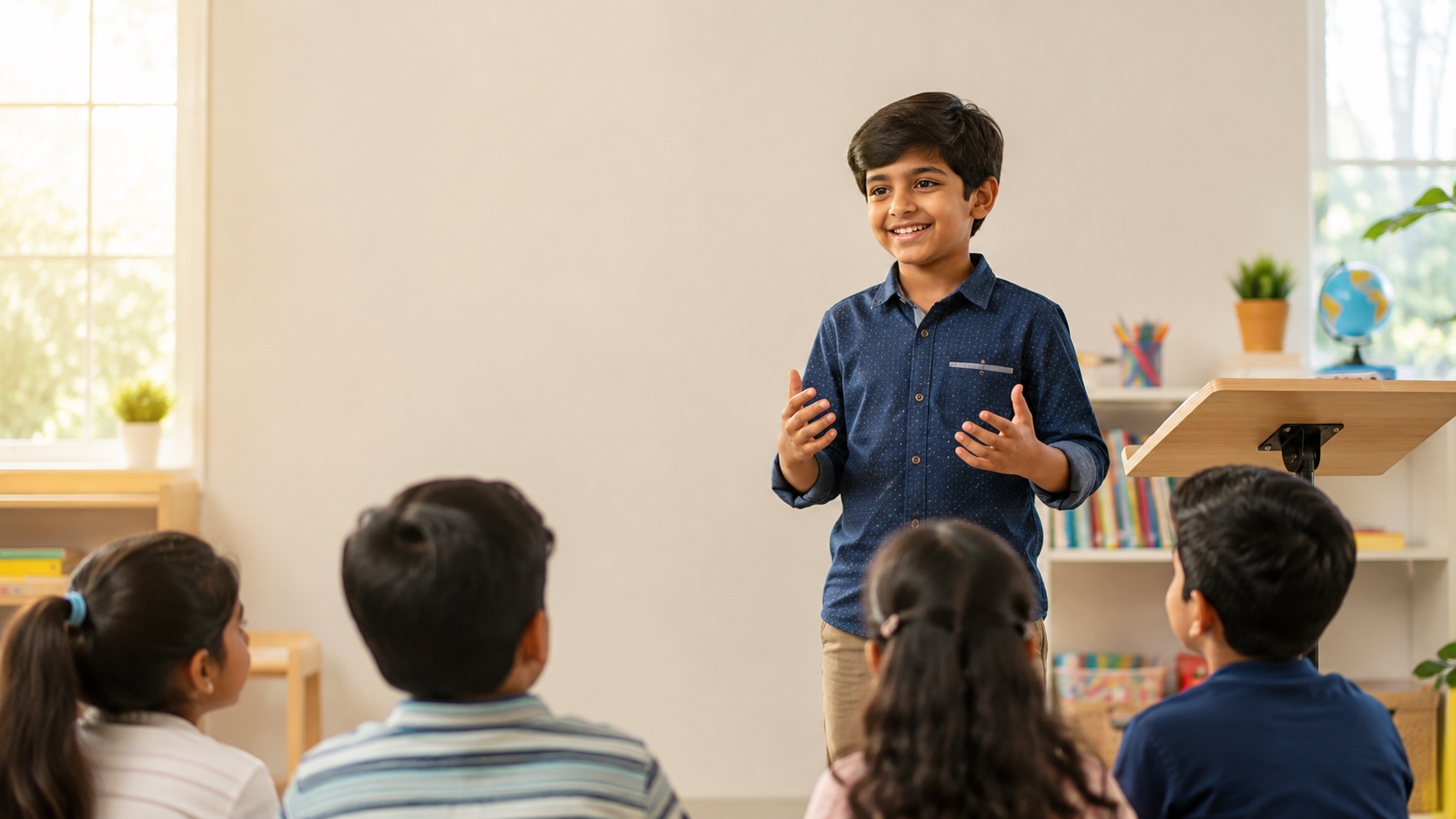
Public speaking is an important skill that helps children express their ideas, communicate clearly, and become more confident. But choosing the right topic can sometimes be harder than giving the speech itself.
For young children, a good public speaking topic should be simple, interesting, age-appropriate, and easy to understand. When children speak about things they already know or enjoy, they are more likely to feel comfortable and speak naturally.
Whether your child is preparing for a school speech, elocution competition, classroom presentation, storytelling activity, extempore round, or simply practicing public speaking at home, the right topic can make a big difference.
In this guide, you'll find 100+ public speaking topics for kids, including easy topics, 1-minute speeches, 2-minute speeches, creative ideas, funny topics, school topics, and more.
Why Is Public Speaking Important for Kids?
Public speaking is more than speaking in front of an audience. It helps children develop communication and thinking skills that can support them at school and in everyday life.
Regular public speaking practice can help children:
Build confidence
Express their thoughts clearly
Improve vocabulary
Develop better pronunciation and fluency
Organize their ideas
Improve listening and communication skills
Develop critical thinking
Become more comfortable speaking in front of others
Improve body language and presentation skills
Learn to express opinions respectfully
Children don't need to become perfect speakers immediately. Small speaking opportunities and regular practice can gradually help them become more confident.
How to Choose a Public Speaking Topic for Your Child
Before choosing a topic, consider these simple questions:
1. Is the Topic Age-Appropriate?
A five-year-old may enjoy talking about their favourite toy, while an older child may be ready to discuss technology, leadership, or the environment.
2. Does Your Child Like the Topic?
Interest makes speaking easier. If your child loves animals, sports, books, or space, use those interests to choose a topic.
3. Can Your Child Explain It in Their Own Words?
Avoid topics that are too complicated. A simple topic spoken confidently is better than a difficult topic that a child has memorized without understanding.
4. How Much Time Does Your Child Have?
A one-minute speech should focus on just a few ideas. A longer presentation can include examples, stories, facts, and opinions.
Easy Public Speaking Topics for Kids
These topics are great for beginners and younger children.
My Family
My Best Friend
My Favourite Food
My Favourite Colour
My Favourite Toy
My Favourite Book
My Favourite Cartoon Character
My Favourite Animal
My Favourite Game
My Favourite Teacher
My School
My Classroom
My Hobby
My Birthday
My Pet
My Favourite Festival
My Favourite Season
My Favourite Place
My Favourite Sport
My Favourite Subject
These topics are easy because children can use their own experiences and memories to build their speech.
1-Minute Speech Topics for Kids
A one-minute speech is a great way to introduce children to public speaking. The goal isn't to say as much as possible. Instead, children should focus on one clear idea and a few supporting points.
My Favourite Book
My Favourite Teacher
My Favourite Animal
My Favourite Hobby
A Person I Admire
Why I Like My School
Importance of Saying Thank You
Why Kindness Matters
My Favourite Game
My Dream Job
One Thing That Makes Me Happy
My Favourite Festival
Why I Love Reading
My Favourite Sport
One Good Habit I Have
A Special Day in My Life
My Favourite Place
Why Friends Are Important
My Favourite Food
Something I Want to Learn
Simple 1-Minute Speech Structure
Teach your child this easy format:
Opening → 2–3 points → Conclusion
For example:
Topic: My Favourite Animal
Start with the animal's name.
Give two reasons you like it.
Share one interesting fact.
Finish with why it is special to you.
This structure helps children organize their thoughts without memorizing every sentence.
2-Minute Speech Topics for Kids
Two minutes gives children more time to explain an idea, share examples, or tell a short story.
Why Reading Is Important
Importance of Cleanliness
Why We Should Save Water
Why Trees Are Important
Benefits of Outdoor Play
Importance of Healthy Food
Why Sleep Is Important
Why Teamwork Matters
The Importance of Good Habits
Why We Should Help Others
What Makes a Good Friend?
Why School Is Important
Why Everyone Should Have a Hobby
The Importance of Exercise
Why We Should Respect Others
The Importance of Sharing
Why We Should Protect Animals
The Importance of Being Honest
Why Learning Is Fun
How Kindness Can Make a Difference
For a two-minute speech, encourage children to include an introduction, two or three main points, an example, and a conclusion.
Creative and Imaginative Speech Topics for Kids
Creative topics allow children to use their imagination and make their speeches more personal.
If I Could Fly
If I Could Talk to Animals
If I Were Invisible
If I Could Travel Through Time
If I Were a Superhero
If I Lived on the Moon
If Toys Could Talk
If I Could Invent Anything
If I Were the Principal for a Day
If I Could Build My Own School
My Dream Robot
My Dream World
A World Without Homework
A School in the Future
My Perfect Day
There are no wrong answers with imagination-based topics. Encourage your child to explain what they would do, why they would do it, and what might happen next.
Funny Public Speaking Topics for Kids
Humour can make children more relaxed while speaking and can help keep an audience interested.
Why Bedtime Comes Too Early
Why Homework Should Take a Holiday
If My School Bag Could Talk
The Secret Life of My Toys
Why My Alarm Clock Is My Enemy
What My Pet Really Thinks About Me
If Parents Had Homework
Why Weekends Are Too Short
If My Pencil Could Complain
A Day Without My Favourite Snack
If My Teacher Became a Student
Why Finding Matching Socks Is So Difficult
If My Toys Ran the House
The Funniest Thing That Happened at School
If I Could Make My Own Rules for a Day
Keep funny speeches age-appropriate and encourage children to use their own experiences rather than copying jokes.

School Speech Topics for Kids
These topics work well for classroom activities, school assemblies, competitions, and presentations.
Importance of Education
My Role Model
Importance of Discipline
The Value of Time
Importance of Teamwork
The Importance of Respect
Why We Should Keep Our School Clean
Benefits of Reading
Importance of Sports
Importance of Good Manners
Internet Safety for Kids
Importance of Healthy Habits
Why We Should Save Water
Caring for the Environment
How to Be a Good Friend
Elocution Topics for Kids
Elocution gives children an opportunity to practice expressive speaking, pronunciation, voice, and presentation.
Education for All
My Role Model
The Importance of Kindness
The Value of Time
Save Our Planet
Unity Is Strength
The Importance of Courage
Never Give Up
The Power of Positive Thinking
The Importance of Helping Others
When preparing for an elocution activity, children should focus not only on the words but also on voice clarity, expression, pauses, pronunciation, and confidence.
Extempore Topics for Kids
Extempore speaking encourages children to think quickly and express an idea without extensive preparation.
What If There Were No Mobile Phones?
Describe Your Ideal School
What Would You Do With a Magic Wand?
If You Could Change One School Rule
What Makes a Good Friend?
If Animals Could Talk
What Would You Do If You Were Invisible?
Your Perfect Weekend
If You Could Meet Any Famous Person
One Thing You Would Change About the World
For younger children, give them a few seconds to think before they start. The goal is to encourage clear thinking and communication, not perfection.
Presentation Topics for Kids
Presentation topics allow children to explain information to an audience using a clear structure.
Internet Safety for Kids
How the Brain Works
The Solar System
Amazing Animals
Importance of Yoga
How Plants Grow
Famous Indian Scientists
The Importance of Exercise
Climate Change and Kids
Inventions That Changed the World
For a presentation, children can use a simple format:
Introduction → Main Points → Example → Conclusion
Opinion-Based Speech Topics for Kids
Opinion topics help children learn to form an idea and support it with reasons.
Should Kids Have Homework?
Should Children Have Screen-Time Limits?
Is Outdoor Play Better Than Video Games?
Is Reading Better Than Watching TV?
Should Children Have Their Own Smartphones?
Is Competition Good for Kids?
Should School Uniforms Be Mandatory?
Should Kids Have More Time for Hobbies?
Is Winning More Important Than Participating?
Should Schools Have More Activity-Based Learning?
Teach children a simple opinion structure:
My opinion → My reasons → An example → My conclusion
This helps them learn to communicate an idea logically and respectfully.
Environment and Social Topics for Kids
Children can also practice speaking about topics that encourage awareness and responsibility.
Save Water
Save Trees
Reduce Plastic Use
Protect Animals
Keep Our Planet Clean
Importance of Recycling
Clean Air
Caring for Nature
Helping People in Need
Kindness Matters
Being a Responsible Citizen
Helping Our Community
Making the World a Better Place
Why We Should Avoid Wasting Food
How Children Can Help the Environment
How to Prepare a Speech for Kids
Once your child chooses a topic, preparation becomes much easier with a simple process.
Step 1: Understand the Topic
Ask your child:
"What do you want people to know about this topic?"
This helps them identify the main idea.
Step 2: Write Down Key Points
Instead of writing a huge paragraph, make a list of three to five important points.
Step 3: Create a Strong Opening
A speech can begin with:
A question
A surprising fact
A short story
A personal experience
An interesting statement
For example:
"What would happen if there were no trees on Earth?"
This immediately gives the audience something to think about.
Step 4: Explain the Main Idea
Let your child explain two or three important points in simple language.
Step 5: Add an Example
A personal example or short story can make the speech easier to understand and remember.
Step 6: End Clearly
The conclusion should remind the audience of the main message.
For example:
"So, let's all do our part to protect the trees around us. Thank you!"

7 Tips to Improve Public Speaking Skills in Kids
1. Practice Speaking Aloud
Reading a speech silently isn't enough. Encourage your child to practice speaking aloud.
2. Don't Force Word-for-Word Memorization
Help your child remember the main ideas instead of every single sentence. This usually makes speaking sound more natural.
3. Practice Eye Contact
Encourage your child to look at the audience instead of constantly looking at the floor or their notes.
4. Work on Voice Modulation
Speaking in exactly the same tone can make a speech difficult to follow. Encourage children to change their tone and volume naturally when they want to emphasize an idea.
5. Use Natural Gestures
Hand gestures, facial expressions, and good posture can make a speech more engaging.
6. Pause Instead of Rushing
Children often speak quickly when they are nervous. Teach them to pause after an important point and take a breath.
7. Start With a Small Audience
Begin with parents or siblings. Once your child becomes comfortable, gradually practice in front of a larger group.
How Parents Can Help Children Practice Public Speaking at Home
Public speaking practice doesn't always need a stage.
Parents can turn everyday moments into small speaking opportunities.
Try these activities:
Ask your child to explain their favourite toy.
Let them tell you about their day.
Ask them to describe a picture.
Give them a random object and ask them to speak about it for one minute.
Let them retell their favourite story.
Ask them to explain how to play their favourite game.
Have a family "one-minute speech" challenge.
Record their speech and let them listen to it.
Encourage them to present something they learned at school.
Let them teach a family member something new.
The aim is to make speaking regular, playful, and low-pressure.
Frequently Asked Questions
1. What are good public speaking topics for kids?
Good topics are simple, familiar, and interesting. My Family, My Best Friend, My Favourite Animal, My Hobby, My School, My Favourite Book, and My Favourite Game are excellent choices for beginners.
2. What is an easy speech topic for a child?
Personal topics are usually easiest because children already know what to say. Try My Family, My Favourite Food, My Pet, My Hobby, or My Favourite Teacher.
3. What are good 1-minute speech topics for kids?
Some easy 1-minute topics include My Favourite Book, My Favourite Animal, Why Kindness Matters, My Favourite Hobby, My Dream Job, and One Good Habit I Have.
4. What are good 2-minute speech topics for kids?
Children can speak about topics such as Why Reading Is Important, Importance of Cleanliness, Why We Should Save Water, Benefits of Outdoor Play, Why Teamwork Matters, and The Importance of Healthy Food.
5. How can I help my child overcome stage fear?
Start with small speaking opportunities at home. Let your child practice with family members, encourage slow breathing and clear speech, and focus on improvement rather than perfection.
6. Should kids memorize their speeches?
Children don't necessarily need to memorize every word. Remembering the key points and practicing them in their own words can help them speak more naturally.
How can children improve their public speaking skills?
Regular practice is one of the best ways. Encourage children to tell stories, explain ideas, participate in presentations, practice short speeches, and speak about topics they enjoy.
Final Thoughts
Public speaking is a skill that grows through practice, encouragement, and experience.
The right topic can make that first step much easier. Start with something your child knows and enjoys, keep the speech short, and gradually introduce more challenging topics.
Whether your child is preparing for a school speech, elocution competition, presentation, extempore activity, or simply practicing at home, every speaking opportunity can help build confidence.
Remember, the goal isn't to make children speak perfectly. It is to help them express their ideas clearly, listen to others, think independently, and speak with confidence.
And every confident speaker starts somewhere—with one topic, one speech, and one opportunity to be heard.